Friday, May 6, 2022

Tom Wessels and Wayne King, noted environmentalists, speak out for “Scenic” Protection of Lake Tarleton Watershed

 News Release

For Immediate Release

For more information: 603-530-4460


Tom Wessels and Wayne King, noted environmentalists, speak out for “Scenic” Protection of Lake Tarleton Watershed


In Mid-2000, after years of fundraising work, a gathering of political leaders, community leaders, environmental activists, and citizens came together to celebrate what they believed was the final step in protecting Lake Tarleton and its surrounding watershed from threatened development and logging. Together they had raised more than 7.5 million dollars to protect more than 5000 acres in perpetuity. Today they find themselves fighting to protect that public investment once again. 


Lake Tarleton is the largest and purest lake in the White Mountain National Forest. It is one of a very few lakes that local activists have succeeded in protecting from the scourge of aquatic invasive species such as Eurasian Milfoil. Its largely-forested watershed is also a rich cultural resource containing an early colonial settlement, Charleston, and two other unnamed settlement areas as well as evidence of active and regular Abenaki presence dating back thousands of years - most of which still remains shrouded in mystery because it has yet to undergo any serious study.  


Tom Wessels, an internationally celebrated environmental educator, terrestrial ecologist and author of 6 ecology books, whose ability to read the natural landscape is legendary, has joined together with former White Mountain guide, State Senator and Gubernatorial nominee, author and columnist, Wayne King who represented the area that includes Tarleton in the Senate.


Wessels is a long-time professor, now emeritus, at Antioch University New England in the Department of Environmental Studies, where he founded their Master's program in conservation biology. He is often compared with such national environmental leaders as John Muir, and Edward Abbey.  King, who has Abenaki and Iroquois roots, has written extensively on environmental issues and is considered a leader in the Climate Emergency movement.  


Both concur that the Lake Tarleton watershed deserves special status as a Scenic Area, providing it with additional protective measures that recognize the early colonial and indigenous cultural history as well as the particularly pristine natural environment of Tarleton and its sister lakes in the area.


Wessels and King urge interested citizens to make their voices heard by contacting Pemigewasset District Brooke Brown at the address below before the May 11 deadline of adding their names to the letter and sending it to Ms Brooke Brown Pemigewasset District Ranger before a May 11 deadline.. 


More information can be found at the website of the Lake Tarleton Coalition: 

https://www.laketarletoncoalition.org/


Brooke M. Brown 

Pemigewasset District Ranger 

71 White Mountain Drive Campton, NH 03223

brooke.brown@usda.gov


RE: Tarleton Integrated Resource Project

56394 


Tom Wessels is an acclaimed American terrestrial ecologist, now emeritus professor at Antioch University New England in the Department of Environmental Studies. He founded the Master's program in conservation biology. He is the author of five books and is an active environmentalist.


Wayne King was District 2 Senator in NH which includes the Lake Tarleton area. He was the 1994 Democratic nominee for Governor of New Hampshire. King was a guide in the White Mountains as a young man and today is an author, columnist, podcaster, artist, and active environmentalist.


Professor Emeritus Tom Wessels 

The Honorable Wayne D. King 


Brooke M. Brown 

Pemigewasset District Ranger 

71 White Mountain Drive Campton, NH 03223

brooke.brown@usda.gov


RE: Tarleton Integrated Resource Project

56394


Dear Ms. Brown:


We write this letter to express our concern over the Pemigewasset District’s recommendations for the Lake Tarleton region. 


We fully understand the general multi-use mission of the White Mountain National Forest and the National Forest generally. Furthermore, while we are in agreement with the recent Presidential Executive order calling for a more accurate inventory of “Old Growth” forests to help address the Climate Emergency, we are not opposed to responsible and carefully managed logging within the national forest generally. 


However, there is a well-established tradition within the National Forest of identifying certain areas that have significant cultural and environmental value and protecting them with a higher level “Scenic Area” status. We believe that the area around Lakes Tarleton, Armington, Katherine stretching along the Appalachian Trail corridor north to Webster Slide, and Wachipauka Pond warrant such treatment. Furthermore, any logging in this region may pose a threat to important, and still unexamined, cultural resources including Abenaki hunting villages and the early colonial settlement of the now-extinct town of Charleston, as well as the unspoiled and pristine nature of its lakes.


In keeping with the intent of the original land acquisition, the White Mountain National Forest should remove this and all future threats to Lake Tarleton’s surrounding forest by amending the 2005 White Mountain National Forest Plan and designating a Scenic Area in the landscape surrounding Lake Tarleton, Lake Katherine, Lake Armington, and stretching along the Appalachian Trail corridor north to Webster Slide, and Wachipauka Pond. This contiguous landscape is among the most scenic in the Granite State. And yet, despite designating nine (9) unique Scenic Areas in the eastern portion of the WMNF, the White Mountain National Forest has not designated any Scenic Areas west of I-93. For the benefit of the local tourism and recreation economy, and for the integrity of this treasured landscape, including Abenaki and early colonial historical resources, it would be both environmentally and culturally short-sighted to allow logging in these areas - which only constitute a very small portion of the western WMNF and less than ¼ of the land protected through the millions of dollars invested in the Tarleton watershed area in 2000. We respectfully request that you amend the White Mountain National Forest management plan and designate this area a Scenic Area to permanently remove the threat of logging and development. 


This designation would satisfy the concerns of the donors who helped purchase the land and those who have been advocating for its protection and avoid the need for a costly Environmental Impact Assessment that, arguably, should be engaged if the current plan is to move forward. 


Given the environmental and cultural uniqueness of the Lake Tarleton watershed, issuing a DRAFT “Finding of No Significant Impact“ (FONSI) may avoid the need to do a full EIS but leaves the communities who contributed more than 7.5 million dollars to preserve the land feeling that their investment expectations have been ignored. It may also open the WMNF to litigation over the DRAFT FONSI finding in favor of a full-blown Environmental Impact Analysis. 


All this could be avoided with a Scenic Designation allowing for better protection of the cultural resources and conservative management of the apple orchards and areas where invasive species require control without logging and clearcutting in the immediate Lake Tarleton Watershed.  We urge you to take this route.


Sincerely,


Tom Wessels

Wayne King


CC

Derek Ibarguen

Forest Supervisor

Pemigewasset District Ranger Station

71 White Mountain Drive Campton, NH 03223

Derek.Ibarguen@usda.gov


Honorable Jeanne Shaheen

506 Hart Senate Office Bldg, Washington, DC  20510


Honorable Maggie Hassan- United States Senator

330 Hart Senate Office Building, Washington, DC


Honorable Ann McLane Kuster - United States Congresswoman

320 Cannon HOB

Washington, DC 20515

Phone: (202) 225-5206


Honorable Chris Pappas

319 Cannon HOB

Washington, DC 20515

Phone: (202) 225-5456


Chief of the Forest Service: Randy Moore

1400 Independence Ave., SW

Washington, D.C.

20250-0003  (202) 205-8439


Honorable Thomas Vilsack

Secretary of Agriculture


Monday, November 19, 2018

Holiday Gifts - Images and products

Holiday Gifts - Images and products created with my images available here:
https://sites.google.com/site/mindscapeimages/


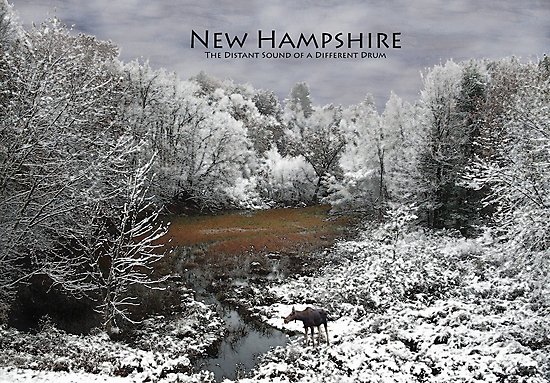
“The Distant Sound of a Different Drum”


Lakota Prayer Fine Art Poster


Created from the original image "Indian Summer" with a prayer by the Lakota leader Yellow Lark.

Oh, Great Spirit Whose voice I hear in the winds, And whose breath gives life to all the world, hear me, I am small and weak, I need your strength and wisdom. Let me walk in beauty and make my eyes ever behold the red and purple sunset. Make my hands respect the things you have made and my ears sharp to hear your voice. Make me wise so that I may understand the things you have taught my people Let me learn the lessons you have hidden in every leaf and rock. I seek strength, not to be greater than my brother, but to fight my greatest enemy - myself. Make me always ready to come to you with clean hands and straight eyes. So when life fades, as the fading sunset, my Spirit may come to you without shame.

Shop this product here: http://spreesy.com/waynedking/232


Shop all of our products at http://spreesy.com/waynedking

Friday, April 13, 2018

Adopt an Image and Raise Money for Your Non Profit or Small Business


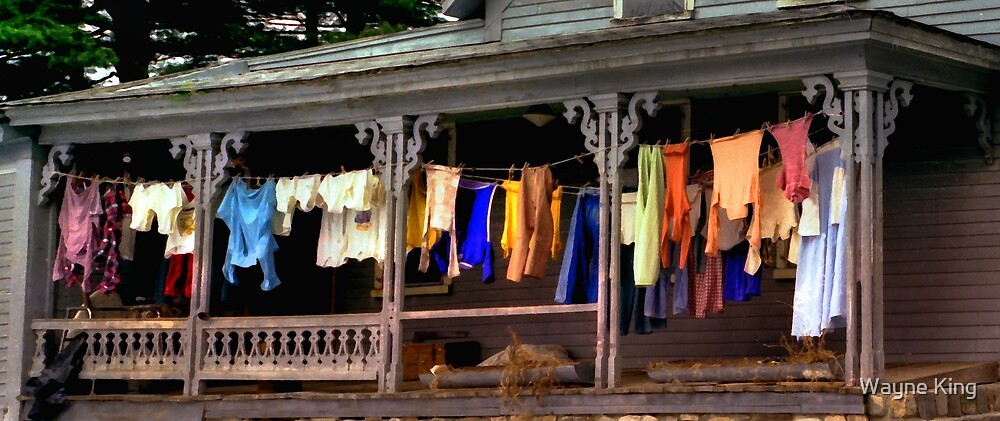
Alton Washday Expressions

Alton Washday Expressions

Produced by special request in an affordable limited edition of 100 signed and numbered originals for the good folks at the Rumney Village Store - that would be George & Sheila - a beautiful 8" x 20" signed image with a certificate of authenticity. You can purchase this original art for just $95.00 at the Rumney Village Store on Main Street in Rumney, New Hampshire. If it's too far to travel and you'd still like an original signed print, you can order it right here and we'll see to it that the Rumney Village Store gets credited - but you can save the cost of shipping by stopping by RVS and buying it directly and maybe purchasing one of their great deli offerings! or grab a copy of Sacred Trust 😉 . http://bit.ly/AltonEXP

As a way to support local businesses and nonprofits I have created this Adopt-an-Image program. If you or your nonprofit have an interest in adopting your favorite image its easy, just click here: http://bit.ly/AdoptImage 

Wednesday, January 24, 2018

Wayne King’s New Novel Echos New Hampshire’s Own Ongoing Battle Over Northern Pass


News Release
For Immediate Release
1/23/18
For more information: 603-515-6001


“Sacred Trust” Now Available in Bookstores and on Amazon
Wayne King’s New Novel Echos New Hampshire’s Own Ongoing Battle Over Northern Pass

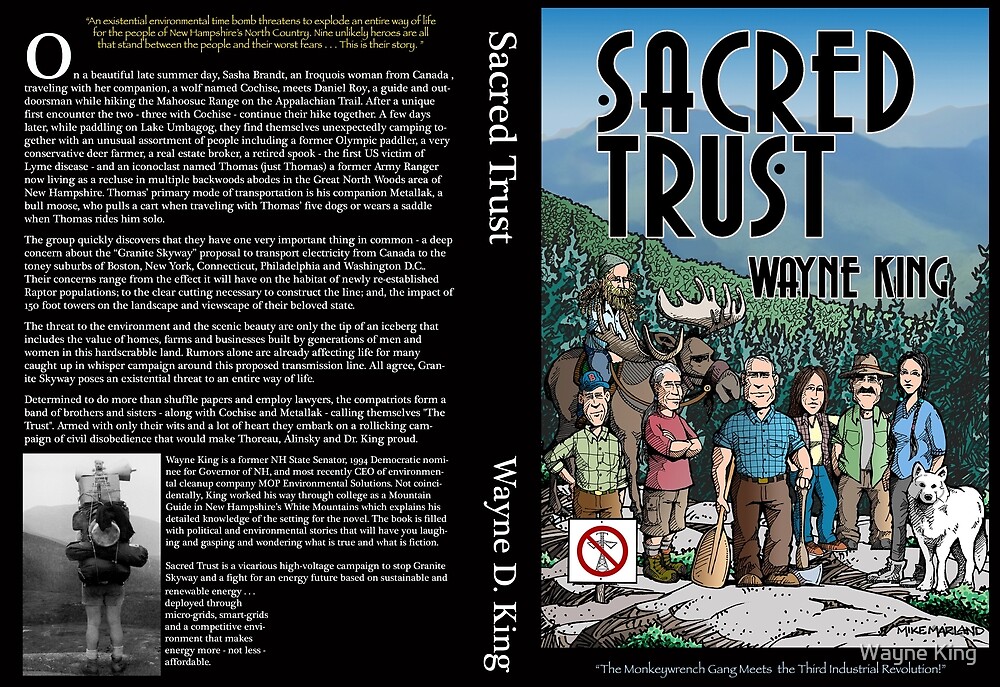
If the cover of “Sacred Trust”, created by Mike Marland, doesn’t clue you in, it won’t take long to realize that this novel is written as a vicarious homage to New Hampshire’s own ongoing battle over the controversial “Northern Pass” project and other similar projects.

Author, former State Senator and 1994 Democratic Gubernatorial nominee Wayne D. King adroitly weaves a story with a familiar ring . . . the clash of ordinary people confronting money and power in an epic battle to protect the land they love.

“Sacred Trust” is the tale of a rollicking campaign of civil disobedience against a private powerline, pitting nine unlikely environmental patriots, calling themselves “The Trust”, against the “Granite Skyway” transmission line and its powerful, well-connected consortium of investors.

With an obvious deep fondness for both the people and the land, King weaves a fast-paced tale filled with both real and fictional stories from the political world and life in the Granite State.  In a rich tableau that includes sometimes hilarious and sometimes hair-raising stories of Senators driving North in a Southbound Interstate lane after a night of drinking at the Highway Hotel; Doctors sneaking a pregnant Llama into a hospital surgical ward for ACL surgery; A bear and a boy eating from the same blueberry patch atop Mount Cardigan as his father, the Ranger, watches helplessly from the fire tower, and more.

Among the heroes of the story is Sasha Brandt, an Iroquois woman from Canada. While hiking the Mahoosuc Range of the Appalachian Trail with her companion - a wolf named Cochise - Brandt meets Daniel Roy, a New Hampshire “boy” and now a guide and outdoorsman. After a unique first encounter they continue their trip together, eventually finding themselves camping with an unusual assortment of people including a former Olympic paddler, a conservative deer farmer, a retired spook, sidelined when he became the first US victim of Lyme disease; and an iconoclast and former Army Ranger named Thomas who lives in multiple backwoods abodes in the Great North Woods and rides a moose named Metallak – aptly named for the “Lone Survivor of the Megalloway” tribe, who in the late 1800’s was reputed to ride a moose himself.

The group quickly discovers that – despite their very broad range of ideological beliefs - they are united in their deep concern about the Consortium’s proposal to bisect the most beautiful parts of the state with massive 150 foot towers and clear cut forests for the sole purpose of transporting electricity from Canada to more affluent markets beyond its borders.  Like Oligarchs of the Gilded Age who minimized their costs by creating a legacy of polluted land and water, these modern Oligarchs stand to reap 100% of the benefits while passing off a large portion of their costs through the generations-long visual pollution of the public commons and all the economic shockwaves that result.

Determined to do more than shuffle papers and employ lawyers, the compatriots form a band of brothers and sisters - along with Cochise and Metallak. Armed with only their wits and a lot of heart they embark on a rollicking campaign of civil disobedience that would make Thoreau and Dr. King proud.

Although “Sacred Trust” is a work of fiction, King says that educators will find the novel a great classroom resource as well. Adding a new dimension and lively discussion to classes on the emergence of the renewable energy era, sustainability, and the American tradition of protest and its place in an “Era of Terrorism”.

“in the coming “Age of Electricity” “ King says, “a principal battleground will be over who controls the production and distribution of electric power. Across America today, the battle lines are being drawn. Utility companies, many in an existential battle for survival, are pitted against advocates of a new distributed energy paradigm where small, renewable power sources replace today’s large electricity generation plants.”

“Most Americans” King asserts, “notice that things are changing, but have yet to fully grasp what a sea change in life it will be for every American.”

“Sacred Trust” follows the trail of heroic citizens banding together to stop one especially egregious powerline. The citizens who stand to lose most are dead set against the project . . . but the political winds are against them. It is in this setting The Trust takes on the Consortium.

As the actions of The Trust gain traction and momentum, other citizens join in support including a wave of supporters on social media; “The Gazetteers”, a group of citizen activists writing in the style of the Federalist Papers; and journalists including one business writer who weaves together details of the historic record leading his readers through a virtual primer on the evolution of a post-carbon energy paradigm beginning with the 1972 election of Jimmy Carter and the passage of the National Energy Policy Act into which NH Senator John Durkin inserted an eight word amendment that rocked the world.

"Sacred Trust" is a hilarious and vicarious, high voltage campaign to stop the “Granite Skyway” leading the reader through the hijinks of The Trust, and the series of choices we all are currently confronted in the emerging “Age of Electricity”.

For each of the members of The Trust it is a sacred campaign fought against an impending legacy of steel towers and scarred lands - an existential threat to an entire way of life. The Trust is all that stands between the people and their worst fears . . . and they are willing to pay any price to prevail. 
                                                             

“Sacred Trust”
Paperback: 354 pages
Publisher: CreateSpace Independent Publishing Platform
ISBN-10: 1981490302
http://bit.ly/STPaper
Price: $14.95*

Sacred Trust Kindle eBook
http://bit.ly/STrust
Price: $2.99*

https://thesacredtrust.blogspot.com/


* Special discounts are available to schools, libraries, and nonprofits. Please contact 603-515-6001

Monday, December 18, 2017

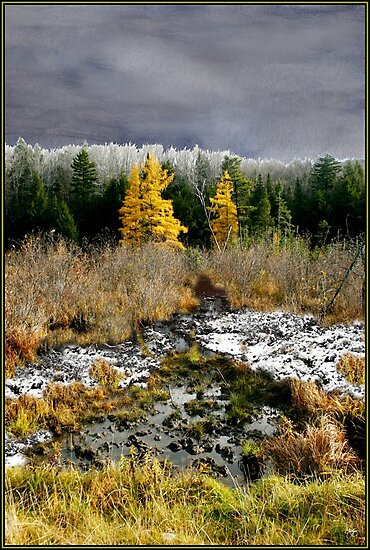
A Golden Moment in the Larch Bog

A Golden Moment in the Larch Bog

Chosen as a Featured Image at Fine Art America

Hand painted sky completes the image in this image that combines elements of photography and watercolor painting. An edition of 25 signed originals is created with a certificate of authenticity along with a digitally initialed open edition. To purchase the signed original with a certificate of authenticity, contact the artist directly, or click here: http://bit.ly/2ou9Pqr

The digitally initialed open edition provides you with the closest approximation of an original without the premium cost of the original. Open Edition prints of this image are available for as little as $12.26

Saturday, December 16, 2017

"Sacred Trust is now available in paperback!


"Sacred Trust is now available in paperback!

“An existential environmental time bomb - in the form of a massive powerline - is about to explode an entire way of life for the people of the North Country. Nine unlikely heroes - rock climbers, paddlers, a deer farmer and a former spook -  are all that stands between the people and their worst nightmare.”

This is their story . . .

The paperback version is available here: 

Sacred Trust Kindle eBook

Sign up for updates and events here.


Sunday, November 12, 2017

The Wikipedia Conundrum

Many a teacher today forbids his/her students use of Wikipedia, yet it is arguably the richest information resource of all time; an encyclopedia which draws on users to expand the breadth and depth of the information contained "within" it.

The argument of those teachers may be that it is "unreliable" . . . a lazy man's refuge. Yet in the end, how is that different from any other works of humans? The very act of committing words to paper is an act fraught with the perils associated with the human condition. . . that each of us brings the perspectives and prejudices of his/her own arc of experience to the task of conveying a "truth" or a set of "truths".

The physicist Stephen Hawking, in a speech celebrating the new Millennium at the White House said ". . . common sense is just another name for the prejudices that we have been brought up with."

Wikipedia is no more or less useful than any other resource but it does provide an effective launchpad for exploring almost any idea, event, person or theory.

To deny students access to the rich resources contained within Wikipedia is tantamount to denying them access to the wisdom of their elders or their teachers. Instead they must be taught to appreciate Wikipedia and to be aware of its limitations - as Ronald Reagan put it to "trust but verify". Reagan was speaking of the complexities of the US-Russian relationship, but he could very well have been speaking about the task of researching, or in an even broader sense the process of learning.

A good teacher need not fear Wikipedia, unless the depth of understanding that he or she themselves bring to their discipline and teaching is so shallow as to grant Wikipedia the power of absolute truth. A good teacher will use this resource as a means of stimulating students to seek out pathways to greater understanding, a solitary brainstorming session where ideas, links and resources lead us to drill deeper into the resources that lie beyond the gates of the wiki kingdom.

Wayne D. King

Asquamchumaukee - Place of Mountain Waters - A Ramble Through the Baker River Valley

Here's a great idea for holiday gift giving. . .

Asquamchumaukee - A photographic ramble through the Baker River Valley of New Hampshire


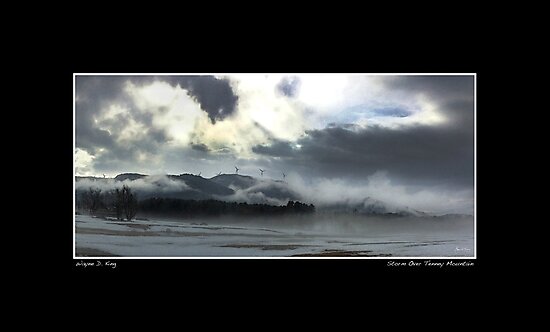
Storm Over Tenney Mountain

Asquamchumaukee - Place of Mountain Waters

A photographic ramble through the Baker River Valley of New Hampshire

This book and the images from it are available in a number of different formats including a large landscape hardcover, signed and numbered, limited edition art book; an open edition in hardcover, softcover and eBook formats as well as other related products including calendars, clocks, mugs, cards, posters and prints.

Signed, Numbered Limited Edition, Large Format $165.00
This book requires the artist to sign and number the books, it can ONLY be ordered directly from me at this secure address:
Asquamchumaukee Cover
http://bit.ly/OrderAsquam

Purchase the signed limited edition and receive your choice of two complimentary posters


Open Edition (unsigned) - Large Format $98.76
Available through Amazon.com
Large Landscape Hardcover 13” x 11” 
42 Pages printed on standard paper


Open Edition Small Hardcover (unsigned) - 8"x10" Format $59.35
Available through Amazon.com
Standard Landscape Hardcover 8” x 10” 
42 Pages printed on standard paper
Hardcover with Dust Jacket: 


Softcover "Keepsake Version"  8"x10": $39.58
Plus shipping & handling

eBook from Blurb
42 Pages
$4.99

Detailed information about Calendars, cards, clocks and other gifts can be found here.

Asquamchumaukee Facebook Page
https://www.facebook.com/pages/Asquamchumaukee-Baker-River-Valley/189924584514401?ref=hl

http://bit.ly/Asquam_FB


Dedication: This book is dedicated to the "Ladies of Got Lunch! Rumney" who saw a need and selflessly stepped forward to help and the millions of heroic people who volunteer in their communities, small and large in the quiet of anonymity and the glow of the hope they create through their actions.


ebook
http://store.blurb.com/ebooks/491117-asquamchumaukee-place-of-mountain-waters-open-edition


http://blur.by/1EISj5I

50% of the net  proceeds from sales of this book will benefit the local "Got Lunch!" programs in the Valley. 


Friday, October 27, 2017

"Sacred Trust" Overview


“The Monkey Wrench Gang Meets the Third Industrial Revolution!”

In the coming “Age of Electricity” the principal battleground will be over who controls the production and distribution of power. All across America today the battle lines are being drawn and the two sides are rushing to create advantages for themselves. Already more than 10 trans-national power transmission projects are proposed from Maine to Washington State and the Canadian Electricity Association projects a tripling of that demand in the next ten years. In most instances these transmission projects are being proposed by utility companies or consortiums that include a local utility company.

Utility companies represent one front in this battle over competing visions of our energy future. These utility companies, already in an existential battle for survival, seek to maintain control of the revenues generated by the flow of electricity. With a few rare exceptions, they are pitted against those advocates of a new distributed energy paradigm where small, renewable power production replaces the large electricity generators of today.  

Most Americans notice that things are changing with respect to energy production and transmission but they have yet to put together the full picture of what will be a sea change in life for every American this presages.

“Sacred Trust” is intended to tell that story in the context of a novel about a group of citizens that have joined together to stop the construction of one, especially egregious powerline, proposed in the small state of New Hampshire where tourism is the second most important industry and the people deeply cherish their beautiful mountains, clean air and pristine waterways.

The power company behind the transmission line, Polaris Electric, proposes to put most of the line above ground with massive 150 foot towers and intends to export 100% of the power right on through the state - like a giant extension cord - with no benefit to the people of the state. In short, like the oligarchs of a previous age, they intend to reap 100% of the benefits and to pass off a large portion of their costs through the generations-long visual pollution of the public commons, to say nothing of the decline in property values and the unknown scientific consequences of high voltage transmission lines on citizens living in their path.

The citizens of the state who stand to lose most from the destruction of real estate values and cherished viewscape are dead set against the project but the political winds are against them with a Governor in the pocket of the utility company and an approval process that seems to be rigged against them, eight unlikely compatriots from across the political spectrum come together to take on the consortium proposing the “Granite Skyway” Transmission line.

While the compatriots, who call themselves The Trust, engage in creative civil disobedience intending to stop the project, or at the very least to literally drive it underground, a group of writers and activists, presenting themselves in the style of the writers of the Federalist Papers produce a series of essays in opposition to Granite Skyway, making the intellectual case, justifying the actions of The Trust.  One business writer, in search of a pulitzer, takes on the task of describing the tableau in which all of this takes place beginning with the 1972 election of Jimmy Carter and the drafting of the National Energy Policy Act and the Public Utilities Regulatory Policy Act into which one lone New Hampshire Senator, John Durkin, inserted two lines that changed history and ushered in the renewable energy revolution.Through the device of a series of articles scattered through the novel, business editor James Kitchen leads his readers through a virtual primer of the battle for a new post-carbon energy paradigm.

"Sacred Trust" is a vicarious, high voltage adventure to stop a private electric transmission powerline that leads the reader through not only the hijinks of The Trust, but also through the series of choices with which we all are currently confronting, or will be, in this new “Age of Electricity”.

Described by one reader as "The Monkey Wrench Gang Meets the Third Industrial Revolution" the book follows these unlikely compatriots as they dodge both the law and a cabal of recruits doing the dirty work of the Consortium.

In part one of the book Sasha Brandt, an Iroquois woman from Canada who travels with her companion, a wolf named Cochise, meets Daniel Roy, a guide and outdoorsman while hiking the Mahoosuc Range on the Appalachian Trail. After a unique first encounter the two - three with Cochise - continue their hike together. A few days later, while paddling on Lake Umbagog, they find themselves unexpectedly camping together with an unusual assortment of people including a former Olympic paddler, a very conservative deer farmer, a real estate broker, a retired spook who was the first US victim of Lyme disease and an iconoclast named Thomas (just Thomas) who is also a former Army Ranger now living as a recluse in multiple backwoods abodes in the Great North Woods area of New Hampshire. Thomas is also unique in that his primary mode of transportation is a moose named Metallak, who pulls a cart when traveling with Thomas’ five dogs or wears a saddle when Thomas rides him solo.

The group quickly discovers that they have one very important thing in common - a deep concern about the Granite Skyway proposal to transport electricity from Canada to the toney suburbs of Boston, New York, Connecticut, Philadelphia and Washington D.C.. Their concerns range from the effect it will have on the habitat of newly re-established Raptor populations; to the clear cutting necessary to construct the line; and, the impact of 150 foot towers on the landscape of their beloved state.

The threat to the environment and the scenic beauty are only the tip of an iceberg that includes the value of homes, farms and businesses built by generations of men and women in this hardscrabble land. Rumors alone are already affecting life for many caught up in whisper campaign around this proposed transmission line. All agree, Granite Skyway poses an existential threat to an entire way of life.

Determined to do more than shuffle papers and employ lawyers, the compatriots form a band of brothers and sisters - along with Cochise and Metallak - calling themselves "The Trust". Armed with only their wits and a lot of heart they embark on a rolicking campaign of civil disobedience that would make Thoreau, Alinsky and Dr. King proud.

While the book is a work of fiction, teachers and professors may find it a book that would add a new dimension to classroom discussions and an interesting touch for classes on sustainability, renewable energy or the American tradition of protest.

Throughout their adventure the members of "The Trust" examine many of the most important questions of our time including how America can continue to make an honored space for free speech and civil disobedience in an era of terror; how social media can help create accountability in an increasingly corporatized mega-media landscape; and, how citizens can challenge the corporate oligarchies that often threaten our planet's future.

"Sacred Trust" is written by Wayne King a former State Senator, Democratic nominee for Governor of NH, and most recently CEO of environmental cleanup company MOP Environmental Solutions. Not coincidentally, King worked his way through college as a Mountain Guide in New Hampshire’s White Mountain which explains his detailed knowledge of the setting for the novel. The book is filled with political and environmental stories that will have you laughing and gasping and wondering what is true and what is fiction.

"Sacred Trust' is a vicarious, high voltage campaign to stop the Granite Skyway power transmission project and its short-sighted and in some cases greedy corporate sponsors, intent on using political muscle and money to lock up the region's energy production and distribution, short circuiting efforts to bring about an energy future based on sustainable, and renewable energy deployed through micro-grids, smart-grids and a competitive environment that makes energy more - not less - affordable.

http://bit.ly/STrust

Saturday, July 15, 2017

"Sacred Trust" Published as eBook on Amazon

News Release
For Immediate Release


"Sacred Trust" Published as ebook on Amazon
Available from Kindle Books
Moosewood Communications Publisher

http://bit.ly/STrust

"Sacred Trust" A vicarious, high voltage adventure to stop a private powerline has been published on Amazon.com as an ebook with the paper edition due soon.

Described by one reader as "The Monkey Wrench Gang Meets the Third Industrial Revolution" the book is a fictional account of a group of unlikely compatriots who join together to stop a powerline proposed by a private consortium, employing creative civil disobedience in the traditions of Alinsky, Thoreau and King. 

In the book, Sasha Brandt, an Iroquois woman from Canada who travels with her companion, a wolf named Cochise, meets Daniel Roy, a guide and outdoorsman while hiking the Mahoosuc Range of the Appalachian Trail. The two find themselves unexpectedly camping together on Lake Umbagog with a group of unlikely compatriots including a former Olympic paddler, a deer farmer, a retired spook who was the first US victim of Lyme disease and an iconoclast named Thomas (just Thomas) who lives in multiple backwoods abodes in the Great North Woods and rides a moose named Metallak. The campsite itself is said to have been frequented by the Indian medicine woman Moll Ockett in the early days of the American Republic. 

They find, in short order, that they have one very important thing in common - a deep concern about a proposed private power transmission line proposed to transport electricity from Canada to the toney suburbs of Boston, New York, Connecticut, Philadelphia and Washington D.C. 

The project, dubbed "Granite Skyway", proposes to bring massive 150 foot towers through the most beautiful parts of a state that boasts some of the most beautiful scenery in the entire country.

The threat to the environment and the scenic beauty are only the tip of an iceberg that includes the value of homes, farms and businesses built by generations of men and women in this hardscrabble land. Already affecting life for many caught up in the mere rumor of this proposed transmission line, Granite Skyway poses an existential threat to an entire way of life.

Determined to do more than shuffle papers and employ lawyers, the compatriots form a band of brothers and sisters - along with Cochise and Metallak - calling themselves "The Trust". Armed with only their wits and a lot of heart they embark on a rolicking campaign of civil disobedience that would make Thoreau, Alinsky and Dr. King proud.

While the book is a work of fiction, teachers and professors may find it a book that would add a new dimension to classroom discussions and an interesting touch for classes on sustainability, renewable energy or the American tradition of protest. Woven into the story narrative are news stories by a journalist observing the shifts and upheavals of climate change and the renewable revolution as well as a group of patriots writing in the style of the Federalist Paper authors in opposition to the power project.

Throughout their adventure the members of "The Trust" examine many of the most important questions of our time including how America can continue to make an honored space for free speech and civil disobedience in an era of terror; how social media can help create accountability in an increasingly corporatized mega-media landscape; and, how citizens can challenge the corporate oligarchies that threaten our planet's future.


"Sacred Trust" is written by Wayne King a former State Senator, Democratic nominee for Governor of NH, and most recently CEO of environmental cleanup company MOP Environmental Solutions. Not coincidentally, King worked his way through college as a White Mountain Guide which explains his detailed knowledge of New Hampshire's White Mountains. The book is filled with political and environmental stories that will have you laughing and gasping and wondering what is true and what is fiction. 

"Sacred Trust' is a vicarious, high voltage campaign to stop the Granite Skyway power transmission project and its short-sighted and in some cases greedy corporate sponsors, intent on using political muscle and money to lock up the region's energy production and distribution, short circuiting efforts to bring about an energy future based on sustainable, and renewable energy deployed through micro-grids, smart-grids and a competitive environment that makes energy more - not less - affordable. 


Available from Kindle Books
Moosewood Communications Publisher