
Monday, March 16, 2009


Friday, March 6, 2009
Connecting Learning to the Real World
You will also find lesson plans and exercises that you can do with the children as well.
The Futures Channel
"Twin Windows"

Order this image
Clinton hails L.A.'s shift to LED street lights
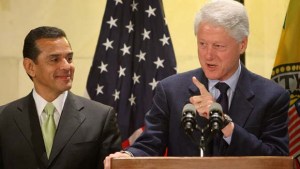
Read full story from LA Daily News
If your company or Government has outdoor lighting and would like to save 80% on your costs by retrofitting with LED lighting, contact us directly for the only American made option. 603-786-9378
Sunday, March 1, 2009
Green Bar and Bat Mitzvahs
That's why more and more people of the Jewish faith are looking for ways to make their Mitzvahs more sustainable.
There are a growing number of planners and websites providing services in this area like GreenMitzvot.com.
For any of these life-milestone parties, your first focal point should be on what can be eliminated or reused from previous parties and events as well as borrowed from friends and temples. After this - and only after this - one should begin to look at more sustainable consumables and making alterations to aspects of the party that represent a greener approach.
In the coming months we'll be bringing you ideas for greening these life-events.
"Beach Silhouette"

Order this image on cards or prints, here.
This image is available for use in nonprofit fundraising efforts with permission of the artist. At no cost to your organization you may adopt an image(s) for your organization and receive 1/2 the net revenues. Follow this link to learn more.
Introducing the Water Footpint
The water footprint, like the carbon footprint, is an indicator of use that looks at both direct and indirect use by consumer or producer. The water footprint of an individual, community or business is defined as the total volume of freshwater that is used to produce the goods and services consumed by the individual or community or produced by the business.
Calculate your water footprint
Expect to see more and more companies adding water to the sustainability calculations in the future. Levi Strauss has already announced that it will be changing the label on certain jeans to say "wash only when necessary and line dry when possible."
"Sandstone against the Sky"

Order this image as a print or poster.
This image is available for use in nonprofit fund raising efforts with permission of the artist. At no cost to your organization you may adopt an image(s) for your organization and receive 1/2 the net revenues. Follow this link to learn more.
Links:
Water Footprint.org
Sunday, February 22, 2009
The Triple Bottom Line Explained
Wayne D. King
You may have heard representatives of companies talking about their Triple Bottom Line. You probably stayed quiet because you held to the tenet that it is far better to keep your mouth closed and be thought a fool than to open your mouth and remove all doubt. At the same time, you made a mental note to look it up on Wikipedia when you were in front of your computer. You may have forgotten to do this so we're providing you with a brief explanation here with references to some other places to learn more.
The concept of the Triple Bottom Line in its simplest terms describes expanding the traditional business reporting framework to take into account the environmental and social performance of a business in addition to their financial performance.
The concept comes from a term coined by John Elkington, founder of the think tank and consultancy SustainAbility. First adopted by the nonprofit world - and specifically those NGOs and NPOs whose missions were synergistic, it is now finding a place in the corporate world with large and small companies embracing the concept, if not the practice.
The triple bottom line is made up of three different bottom lines: separate but interrelated within the concepual framework of the Triple Bottom Line:
- social costs and benefits;
- economic costs and benefits; and,
- environmental costs and benefits.
 |
| Geese Over Tamarack |
Environmental Costs and Benefits: A Triple Bottom Line business integrates the natural environment into its inventory of concerns at the top level. Using best practices a Triple Bottom Line business seeks to minimize its environmental impact and non renewable energy consumption.
Economic Costs and Benefits: In a Triple Bottom Line company profit takes on a broader meaning than in a company where corporate responsibility is held silent. The company is profitable in the classic sense but the profit concept is expanded to the broader community as well.
Consideration of the Triple Bottom Line can take root in a simple philosophical standard that becomes more sophisticated as the business grows or be implimented immediately as a set of standards into the accounting practices of the company. In the case of the later approach it takes on a much more complex and costly form, though - by virtue of it demonstrability - that cost may be justifiable in the market.
For this and other reasons, it is often best for companies to use consultants to develop their approach to the triple bottom line, where larger companies can afford full time employees dedicated to the process, smaller companies n a temporary basis who can bring the most current best practices to light.
Bearing in mind that Economics is not a hard science to begin with, a concept like the Triple Bottom Line is open to interpretation but, most important, by embracing a broader conceptual framework for a company's bottom line it opens up a much broader and dynamic array of best practices.
For example: the practice of recycling is in the process of evolving from a "cradle to grave" approach to a "cradle to cradle" approach. A cradle to grave approach examines the product after conception and production. In other words, a product is created and the emphasis of recycling focuses on creating the best possible way to reuse as many components as possible. In the new "cradle to cradle" approach, the corporation that produces the product considers the environmental issues initially in the conceptual stages in order to maximize the recyclability of the product and minimize the waste produced after complete recycling. Additionally the company that is employing best practices under a Triple Bottom Line imperative, gravitates to the product that has been created with a cradle to cradle approach.
 |
| "A Breathless Moment Among the Lupine" |
ICLEI Unveiled
ICLEI stands for International Council for Local Environmental Initiatives
ICLEI is an international association of local governments and national and regional local government organizations that have made a commitment to sustainable development. More than 1000 cities, towns, counties, and their associations in 68 countries comprise ICLEI's growing membership. ICLEI works with these and hundreds of other local governments through international performance-based, results-oriented campaigns and programs.
ICLEI provides technical consulting, training, and information services to build capacity, share knowledge, and support local government in the implementation of sustainable development at the local level. ICLEI's basic premise is that locally designed initiatives can provide an effective and cost-efficient way to achieve local, national, and global sustainability objectives.
"Dusk on the Rumney Town Common"


Order this image as cards or prints, here.
Would you like to use this image as a fundraising instrument for your nonprofit organization or school? Follow this link to learn more.