The Art of Cameron Sinclair
By Wayne D. King
Talk with almost any New Hampshire Gallery owner these days and ask who is the New Hampshire artist with whom people fall in love and chances are pretty good that he, or she, will lead you across the room to a painting signed “Sinclair”. Most likely, your eye has already been drawn by the bright, often swirling, colors that evoke a powerful emotional response. Not an “I’ve been there” response but rather a “this is how my heart sees” response. Because Cameron Sinclair, better known as “Cam”, captures what the heart sees.
Cam Sinclair was born in Shanghai, China, and raised in Bombay, India and American missionary boarding schools until age 14. He returned to the United States at 14 to attend the Valley Forge Military Academy in Pennsylvania for four years. From there, Cam Sinclair went to Springfield College in Massachusetts as a physical education major. Along the way Cam became an All American Wrestler and finished second in the National (NCAA) Tournament while at Springfield College.
Not exactly a typical resume for an artist . . . so where did the interest in art develop and evolve into the work Cam does today? Continued
Friday, March 5, 2010
Sunday, December 27, 2009
Spirit of Change Magazine
Spirit of Change
The Ice Burns Black
Based on the True Tale of One of the Best-Concealed Bombings in History
The chilling real-life account of an unprecedented explosion
in Greenland, and the devastating and deadly effects that still
smolder today.
In 1968, an American B-52G bomber carrying thermonuclear
bombs violently crash-landed into the peaceful, icy terrain of
Northern Greenland. As radioactive metal, plutonium, and
uranium showered the earth for 200 meters in every direction,
even the ice itself turned black.
The Ice Burns Black is the revealing tale of the quietest
bombing in history, and finally uncovers the untold story of
the courage and hardship of those affected by the crash, and
the refusal of their own governments to help them.
This story, including Jeff Carswell’s eye-witness account of
the bombing’s clean-up and subsequent tragic events, spins a
thrilling, true tale that still lives on today.
ISBN: 978-1-60860-837-9
About the Authors:
Terrence Cromwell, a seasoned writer, former Marine, law school graduate, and family man, has worked and lived in diverse parts of the globe, and is currently working on his next project in his native Montana.
Jeff Carswell, survivor of the clean-up at the top of the world and its tragic aftermath, continues his international advocacy today, drawing attention to the plight of those selfless souls – and their families – who worked with him to clean the crash site.
Dr. David James, Ph.D., one of Australia’s foremost journalists and business management scholars, has published countless articles on a myriad of topics.
Dedicated to The Thule Radiation Victims’ Association.
For media inquiries, appearances, or other publicity—please contact:
Ellen Green—PressManager@aegpublishinggroup.com
Labels:
bomb,
nuclear,
poison,
The Ice Burns Black
Saturday, December 12, 2009
John Muir and the American Idea
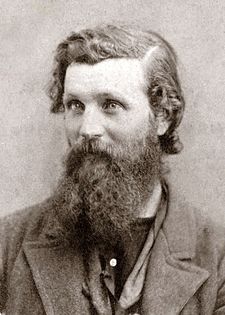
Probably no man more defined the notion of wilderness as an integral part of the American idea than John Muir. Librivox has released a seven hour podcast of John Muir's Guide to Yosemite. It is a beautifully written, as lush and vibrant as the scenes of the Yosemite that Muir describes.
Download Muir's Yosemite
Listen as streaming video
Muir is considered one of the major figures in the birth of environmentalism, though the term itself would not be created for another 3/4 of a century. Muir represented the preservationist philosophy, while Gifford Pinchot, a contemporary of Muir represented the conservationist philosophy, the view that sustainable use of the resource was its highest and best purpose.
I Believe - New Hampshire's Mountain Lions. Print and cards here.
Labels:
Conservation,
environmentalism,
Muir,
pinchot,
preservationism
Monday, November 16, 2009
MPW Takes Green Mainstream in Collaboration with MOP
In 1972, a young entrepreneur named Monte Black, formed a company to provide truck-washing services in central Ohio. He was the only employee of the infant company—he worked seven days a week, first selling and then performing on-site washing services for tractors, trailers, surface mining equipment and structures. While he had entered what was even then a highly competitive industry, he was convinced that hard work, innovation and a commitment to exceed customer expectations would enable him to succeed. He believed that if he “went the second mile” to meet customer needs, his infant company would grow. And it did —adding Waterblasting, Ultra-High Pressure Waterblasting and Cutting, Industrial Vacuuming, Chemical Cleaning, proprietary Container Cleaning and Water Purification Services.
Today that company, now called MPW Industrial Services, is a leading provider of technology-based services to industrial, manufacturing and process facilities in the United States and Canada. With headquarters in Hebron, Ohio, MPW has over 35 years experience rapidly responding to customer needs from their network of more than 40 offices.
MPW's expertise is in waste reduction systems and recently their work with MOP - Maximum Oil Pickup - sorbent, in manufacturing facilities employing chip drag machines has been generating a lot of buzz. Why? Because, together, MOP and MPW identified a way to utilize MOP's sorbent to filter used coolant contaminated with cutting oil and metal filings. MOP immediately developed an appropriately sized boom filled with its renowned sorbent. Now, coolant that would have been headed for a hazardous waste treatment facility, at a hefty per barrell price, is now being recycled and used again on the factory floor. The result will be hundreds of thousands of dollars saved at each plant and the ability to recover both oil and coolant multiple times.
We expect that the folks from MPW will be passing MOP's newly developed product along to a lot of client companies in the coming months and their reputation for helping companes "save green by going green" will be significantly enhanced.
To learn more about MPW's work with corporate waste systems or MOP's oil cleanup product call Shannon Stumbo, Operations Mgr. at MPW (800-827-8790) or Jim Haselhuhn at Tec-MOP distributor of MOP (586-764-0206).

Lone Moose on Robartwood Pond
1/2 Proceeds benefit the Squam Lakes Natural Science Center
Open Edition Print Gallery
Open Edition Gift Gallery (Mugs, Mousepads, etc)
Today that company, now called MPW Industrial Services, is a leading provider of technology-based services to industrial, manufacturing and process facilities in the United States and Canada. With headquarters in Hebron, Ohio, MPW has over 35 years experience rapidly responding to customer needs from their network of more than 40 offices.
MPW's expertise is in waste reduction systems and recently their work with MOP - Maximum Oil Pickup - sorbent, in manufacturing facilities employing chip drag machines has been generating a lot of buzz. Why? Because, together, MOP and MPW identified a way to utilize MOP's sorbent to filter used coolant contaminated with cutting oil and metal filings. MOP immediately developed an appropriately sized boom filled with its renowned sorbent. Now, coolant that would have been headed for a hazardous waste treatment facility, at a hefty per barrell price, is now being recycled and used again on the factory floor. The result will be hundreds of thousands of dollars saved at each plant and the ability to recover both oil and coolant multiple times.
We expect that the folks from MPW will be passing MOP's newly developed product along to a lot of client companies in the coming months and their reputation for helping companes "save green by going green" will be significantly enhanced.
To learn more about MPW's work with corporate waste systems or MOP's oil cleanup product call Shannon Stumbo, Operations Mgr. at MPW (800-827-8790) or Jim Haselhuhn at Tec-MOP distributor of MOP (586-764-0206).
Lone Moose on Robartwood Pond
1/2 Proceeds benefit the Squam Lakes Natural Science Center
Open Edition Print Gallery
Open Edition Gift Gallery (Mugs, Mousepads, etc)
Wednesday, October 21, 2009
A Doll Story: Telling a White Mountain Family History
By LewEllyn Hallett
Reprinted with permission from Heart of NH
I was strolling through the craft tent at Manchester’s Mill City Festival when I spotted Sara Boothman Glines, sitting behind her table weaving a tiny basket with nimble fingers. From the shelves surrounding her, a dozen craggy, wooden faces stared back at me from under felt caps, knit hats, and straw brims. These miniature, rustic figures looked as if they’d stepped out of the old photographs displayed as their backdrop. The dolls sat in rockers or on tree stumps, stepped up a mountain trail or kneeled to stack firewood, and a printed story card stood beside each one. A sign said, “SaraSally Dolls,” which I learned was a combination of Sara’s given name and her family nickname.
I pointed to a photograph of a woman hanging clothes in the sun on an open hilltop and Sara told me the story of her Grammie Boothman doll. Among family papers, Sara had found instructions for her grandmother Edith Watson Boothman’s 1890's detergent recipe, entitled "Washing Made Easy." Along with her photograph of Grammie Boothman doing laundry, this discovery seemed reason enough to immortalize Grammie as a doll folding wash with a detergent recipe tucked inside her basket. The basket that sits in the grass at Grammie Boothman’s feet in the photograph is another family heirloom still in Sara’s possession.
Basket weaver by craft, Sara has developed patterns for a variety of miniature baskets used by her dolls. Sara’s doll-making started as a crafting hobby, but has become a way to preserve history not just for her family but for anyone who longs for such roots to the past. It’s Grammie Boothman marketing laundry detergent to turn-of-the-century homemakers; Aunt Marion knitting socks for World War II soldiers; Great Grandmother Sarah Ann laboring in Manchester’s ribbon factories. It’s a mountaineering guide, a logger, a fly fisher, a cross country skier, a wood carrier, even a North Country Santa. SaraSally dolls record and preserve not only generations of family history and tradition, but a way of life in the mountains of New Hampshire.
For at least seven generations, Sara’s family has lived on holdings in the foothills and valley near Mount Adams, Mount Madison, and the town of Randolph in Coos County. When a family remains for that long in a community, they accumulate some history, including prominent figures to commemorate and important stories to tell. Sara (aka Sally) and her sisters, Rebecca Boothman Parker (Becky) and Susan Boothman Hawkins (Sue, 1950-2004), worked together to develop two series of doll figures. One series represents family members and their stories; the other depicts favorite White Mountain activities and vocations.
Sara invited me to her hillside home in Randolph to spend an afternoon with her and sister Becky. The three of us sat in her bright dining room, the wooden table top crowded with dolls, and a huge, antique map of Coos County on the wall behind us. With Sara’s cat in my lap, I picked up each doll and examined details like a tiny wood ax, a fly fishing pole, snowshoes, and hand-knit scarves. Sara and Becky spun out stories until they wove together and tangled in my brain. They were patient with me, laughing and backtracking down the trails of time and events, using the map to tie storylines to geography.
Growing up in the 1950's and 60's, they knew a rugged mountain lifestyle that was generations old but is now pretty much history. Families were self-sufficient and geared their work to the seasons. Spring was maple sugaring, summer was planting, growing, and harvesting, and winter was trapping, logging, and cutting firewood. They often sat down to meals where everything but salt and pepper came from the farm or the woods by their own labor.
"It’s hard going in New England. My ancestors worked this land and eked out a living," Sara says. "All three of us sisters were encouraged by our mother to do things with our hands, so I’ve always done some kind of craft. I started making dolls eight to ten years ago."
Her first dolls were simple schoolgirls with round, featureless wooden heads, two black dots for eyes, and print dresses like the ones they wore growing up. It was Sue’s idea for Sara to pattern other dolls after family members and pastimes. Sara compiled a catalog of ancestral characters and aspects of mountain life, and developed a more intricate style. The hardwood ball was replaced by a pine egg, which is softer for carving faces full of character and personality.
Sara’s doll making process is a slow one. It takes approximately thirty hours to complete each doll. For the fly fisherman, patterned after her father, the rod itself requires about three hours and is made from the stem of a certain iris that grows in her garden. Sara also ties the tiny flies herself, like she watched her father do. The clothing is patterned after old photographs and historical research. Each doll is a limited edition, and most are made to order or completed for display at a specific event. Prices range from $45 to $75.
Sara uses authentic, local products as much as possible. There are many items she could buy ready-made to use as doll accessories, but the fun is in figuring out how to craft the miniatures herself. She is constantly on the lookout for materials. A weaver of full-size baskets, Sara makes doll-sized knitting, tramping (hiking), ribbon, and laundry baskets patterned after the originals. She makes the hair on most of her dolls from the fleece of local sheep. Becky knits the sweaters, scarves, and socks from hand spun yarn, which is thinner so that she can knit items more to scale.
Some of Sara’s doll figures carry snowshoes. Her father, Jack Boothman, was an outdoorsman and trapper and invented a snowshoe binding that would allow him to get out of the shoes quickly if he fell through the ice while checking traps. He stretched a circular piece of tire innertube over his foot and snowshoe that would come off with a few kicks if necessary. The girls grew up using these bindings and Sara replicates them for her dolls, using bicycle tire inner tubes. In her basement workshop, she demonstrated for me the intricate lacing procedure, and shared that as recently as the 1960's most area roads were not plowed and snowshoes and skis were a primary method of transportation.
This family has thrown almost nothing away, so there is a wealth of memorabilia for the sisters to draw on. They handle the tools their great-great grandparents used, sleep under blankets made of wool grown, sheared, carded, spun, and woven by their great grandmother, study a wealth of photographs and family papers that tell generations of stories, and raid the trousseaus of their great-aunts.
These trousseaus are still intact because the great-aunts promised never to marry. Their mother, Sarah Ann Boothman, was widowed with four young children during the industrial revolution of the 1870's and forced by economic necessity to work in Manchester’s ribbon mills. (The Sarah Ann Doll is dressed as a mill worker and holds a basket of ribbons and scissors.) Sarah Ann thought her daughters could avoid such a plight if they remained single and independent, so they promised. But in case good prospects tempted them to reconsider, they made the beautiful trousseaus.
These other Boothman sisters–Becky, Isabelle, and May–were known locally as “The Aunts.” In the 1890's, The Aunts opened and ran an inn, the Mountain View House, on their grandparents’ farm overlooking a spectacular view of the valley and mountains beyond. Tourism has long been an industry of the area, and there were innkeepers on both sides of the family. In 1923, John H. Boothman, brother to The Aunts and grandfather to the present day sisters, bought the Mt. Crescent House further up the hill. His father-in-law, Laban Watson, was the first proprietor of another well known inn in the valley, The Ravine House. This inn was a base for early Randolph mountaineers and pathmakers and hosted hikers for generations until closing in the1960's.
Like the generations before them, the Boothman sisters grew up spending winters in the valley and summers up the hill in the Mt. Crescent House, taking care of vacationers. There was plenty of work to do both places. There was wood to gather for winter heat, for summer cottages (mountain nights can be chilly even in July), and about 20 cords each year for the wood evaporator that boiled maple sap from 4,000 taps.
"At first, Dad bemoaned the fact that he had only girls," Sara remembers. "But he soon realized that we could do all the chores that boys did and then clean up pretty good to wait on tables at supper." The Boothman girls filled the wood boxes, did laundry, gardened, helped prepare and serve food, cleaned rooms, cared for livestock, fished, logged, and processed maple syrup.
The Maple Sugarer Doll gathers sap the old fashioned way with buckets carried on a handmade yoke. This doll tells the story of a family endeavor that goes back five generations and continues today with Boothman Orchard 100% pure New Hampshire maple syrup produced by Becky’s family. Their orchard is on the same northern slope of the Presidential Range where generations ago the family tapped the trees and boiled the sap in the open over an uncovered fire. In a 1940's photograph, the Boothman parents stand beside the original sugar house. When Jack Boothman went overseas in World War II, his wife Gwen decided to keep sugaring. As she labored in the open, her father-in-law built a sugar house around her.
One source of the family’s rich photographic archives is Sara’s maternal grandfather, well known and prolific White Mountain photographer Guy Shorey. Shorey recorded much of the history and local culture of his day. Sister Sue co-authored a book, Among the White Hills, the Life and Times of Guy L. Shorey, including over 200 of his photographs, a biography of the photographer, and cultural history of the area.
Sara's craft also tells stories of mountain life and records the clothing, equipment, and activities of another era. Appropriately, Sara and her dolls were included in the New Hampshire delegation to the Smithsonian’s Folk Life Festival in Washington, D.C., in 1999. Her sisters also participated, Becky as a Yankee cook and Sue as an interviewer and narrator on stage. Sara remembers, "I took fifty doll bodies because I thought I’d be making dolls for two weeks, but I only completed two. I spent the majority of time talking with people about New Hampshire. They were so interested and had so many questions."
Sara promotes doll making as a good way for everyone–children, adults, whole families–to discover and commemorate their heritage, and teaches workshops to school-age children, 4-H leaders, historical society members, and anyone else with an interest. Students have made dolls from cloth, Masonite patterns, spoons, and even tried their hand at carving wooden faces like Sara’s. Whether they record a family trade or occupation, a favorite hobby, a beloved grandparent, or a hero immortalized in stories repeated from one generation to the next, the result is an exciting discovery and a treasured heirloom.
Each SaraSally doll comes with a tag describing the character or the activity it represents and a larger card telling the doll’s story. "My premise is that the first thing you need to do before making the figure is to write the story, whether researched or remembered," Sara explains. When she teaches her workshops, her students start by writing down a story of their own. “The kids can come up with some unbelievable stories!” she says. The type of doll, the materials, and the skill of the crafter are all secondary to the story the doll will tell.
Whether you love New Hampshire as a native, a newcomer, or a regular visitor, SaraSally Dolls tell a chapter of its story and are a fun, charming way to display a favorite aspect of Granite State heritage. To order dolls, or for information on classes and other products, contact Sara Glines at sarasally3@netzero.net or visit online at www.ravinehousestore.com.
Autumn's Last Dance
2010 Calendar
Reprinted with permission from Heart of NH
I was strolling through the craft tent at Manchester’s Mill City Festival when I spotted Sara Boothman Glines, sitting behind her table weaving a tiny basket with nimble fingers. From the shelves surrounding her, a dozen craggy, wooden faces stared back at me from under felt caps, knit hats, and straw brims. These miniature, rustic figures looked as if they’d stepped out of the old photographs displayed as their backdrop. The dolls sat in rockers or on tree stumps, stepped up a mountain trail or kneeled to stack firewood, and a printed story card stood beside each one. A sign said, “SaraSally Dolls,” which I learned was a combination of Sara’s given name and her family nickname.I pointed to a photograph of a woman hanging clothes in the sun on an open hilltop and Sara told me the story of her Grammie Boothman doll. Among family papers, Sara had found instructions for her grandmother Edith Watson Boothman’s 1890's detergent recipe, entitled "Washing Made Easy." Along with her photograph of Grammie Boothman doing laundry, this discovery seemed reason enough to immortalize Grammie as a doll folding wash with a detergent recipe tucked inside her basket. The basket that sits in the grass at Grammie Boothman’s feet in the photograph is another family heirloom still in Sara’s possession.
Basket weaver by craft, Sara has developed patterns for a variety of miniature baskets used by her dolls. Sara’s doll-making started as a crafting hobby, but has become a way to preserve history not just for her family but for anyone who longs for such roots to the past. It’s Grammie Boothman marketing laundry detergent to turn-of-the-century homemakers; Aunt Marion knitting socks for World War II soldiers; Great Grandmother Sarah Ann laboring in Manchester’s ribbon factories. It’s a mountaineering guide, a logger, a fly fisher, a cross country skier, a wood carrier, even a North Country Santa. SaraSally dolls record and preserve not only generations of family history and tradition, but a way of life in the mountains of New Hampshire.
For at least seven generations, Sara’s family has lived on holdings in the foothills and valley near Mount Adams, Mount Madison, and the town of Randolph in Coos County. When a family remains for that long in a community, they accumulate some history, including prominent figures to commemorate and important stories to tell. Sara (aka Sally) and her sisters, Rebecca Boothman Parker (Becky) and Susan Boothman Hawkins (Sue, 1950-2004), worked together to develop two series of doll figures. One series represents family members and their stories; the other depicts favorite White Mountain activities and vocations.
Sara invited me to her hillside home in Randolph to spend an afternoon with her and sister Becky. The three of us sat in her bright dining room, the wooden table top crowded with dolls, and a huge, antique map of Coos County on the wall behind us. With Sara’s cat in my lap, I picked up each doll and examined details like a tiny wood ax, a fly fishing pole, snowshoes, and hand-knit scarves. Sara and Becky spun out stories until they wove together and tangled in my brain. They were patient with me, laughing and backtracking down the trails of time and events, using the map to tie storylines to geography.
Growing up in the 1950's and 60's, they knew a rugged mountain lifestyle that was generations old but is now pretty much history. Families were self-sufficient and geared their work to the seasons. Spring was maple sugaring, summer was planting, growing, and harvesting, and winter was trapping, logging, and cutting firewood. They often sat down to meals where everything but salt and pepper came from the farm or the woods by their own labor."It’s hard going in New England. My ancestors worked this land and eked out a living," Sara says. "All three of us sisters were encouraged by our mother to do things with our hands, so I’ve always done some kind of craft. I started making dolls eight to ten years ago."
Her first dolls were simple schoolgirls with round, featureless wooden heads, two black dots for eyes, and print dresses like the ones they wore growing up. It was Sue’s idea for Sara to pattern other dolls after family members and pastimes. Sara compiled a catalog of ancestral characters and aspects of mountain life, and developed a more intricate style. The hardwood ball was replaced by a pine egg, which is softer for carving faces full of character and personality.
Sara’s doll making process is a slow one. It takes approximately thirty hours to complete each doll. For the fly fisherman, patterned after her father, the rod itself requires about three hours and is made from the stem of a certain iris that grows in her garden. Sara also ties the tiny flies herself, like she watched her father do. The clothing is patterned after old photographs and historical research. Each doll is a limited edition, and most are made to order or completed for display at a specific event. Prices range from $45 to $75.
Sara uses authentic, local products as much as possible. There are many items she could buy ready-made to use as doll accessories, but the fun is in figuring out how to craft the miniatures herself. She is constantly on the lookout for materials. A weaver of full-size baskets, Sara makes doll-sized knitting, tramping (hiking), ribbon, and laundry baskets patterned after the originals. She makes the hair on most of her dolls from the fleece of local sheep. Becky knits the sweaters, scarves, and socks from hand spun yarn, which is thinner so that she can knit items more to scale.
Some of Sara’s doll figures carry snowshoes. Her father, Jack Boothman, was an outdoorsman and trapper and invented a snowshoe binding that would allow him to get out of the shoes quickly if he fell through the ice while checking traps. He stretched a circular piece of tire innertube over his foot and snowshoe that would come off with a few kicks if necessary. The girls grew up using these bindings and Sara replicates them for her dolls, using bicycle tire inner tubes. In her basement workshop, she demonstrated for me the intricate lacing procedure, and shared that as recently as the 1960's most area roads were not plowed and snowshoes and skis were a primary method of transportation.
This family has thrown almost nothing away, so there is a wealth of memorabilia for the sisters to draw on. They handle the tools their great-great grandparents used, sleep under blankets made of wool grown, sheared, carded, spun, and woven by their great grandmother, study a wealth of photographs and family papers that tell generations of stories, and raid the trousseaus of their great-aunts.
These trousseaus are still intact because the great-aunts promised never to marry. Their mother, Sarah Ann Boothman, was widowed with four young children during the industrial revolution of the 1870's and forced by economic necessity to work in Manchester’s ribbon mills. (The Sarah Ann Doll is dressed as a mill worker and holds a basket of ribbons and scissors.) Sarah Ann thought her daughters could avoid such a plight if they remained single and independent, so they promised. But in case good prospects tempted them to reconsider, they made the beautiful trousseaus.
These other Boothman sisters–Becky, Isabelle, and May–were known locally as “The Aunts.” In the 1890's, The Aunts opened and ran an inn, the Mountain View House, on their grandparents’ farm overlooking a spectacular view of the valley and mountains beyond. Tourism has long been an industry of the area, and there were innkeepers on both sides of the family. In 1923, John H. Boothman, brother to The Aunts and grandfather to the present day sisters, bought the Mt. Crescent House further up the hill. His father-in-law, Laban Watson, was the first proprietor of another well known inn in the valley, The Ravine House. This inn was a base for early Randolph mountaineers and pathmakers and hosted hikers for generations until closing in the1960's.
Like the generations before them, the Boothman sisters grew up spending winters in the valley and summers up the hill in the Mt. Crescent House, taking care of vacationers. There was plenty of work to do both places. There was wood to gather for winter heat, for summer cottages (mountain nights can be chilly even in July), and about 20 cords each year for the wood evaporator that boiled maple sap from 4,000 taps.
"At first, Dad bemoaned the fact that he had only girls," Sara remembers. "But he soon realized that we could do all the chores that boys did and then clean up pretty good to wait on tables at supper." The Boothman girls filled the wood boxes, did laundry, gardened, helped prepare and serve food, cleaned rooms, cared for livestock, fished, logged, and processed maple syrup.The Maple Sugarer Doll gathers sap the old fashioned way with buckets carried on a handmade yoke. This doll tells the story of a family endeavor that goes back five generations and continues today with Boothman Orchard 100% pure New Hampshire maple syrup produced by Becky’s family. Their orchard is on the same northern slope of the Presidential Range where generations ago the family tapped the trees and boiled the sap in the open over an uncovered fire. In a 1940's photograph, the Boothman parents stand beside the original sugar house. When Jack Boothman went overseas in World War II, his wife Gwen decided to keep sugaring. As she labored in the open, her father-in-law built a sugar house around her.
One source of the family’s rich photographic archives is Sara’s maternal grandfather, well known and prolific White Mountain photographer Guy Shorey. Shorey recorded much of the history and local culture of his day. Sister Sue co-authored a book, Among the White Hills, the Life and Times of Guy L. Shorey, including over 200 of his photographs, a biography of the photographer, and cultural history of the area.
Sara's craft also tells stories of mountain life and records the clothing, equipment, and activities of another era. Appropriately, Sara and her dolls were included in the New Hampshire delegation to the Smithsonian’s Folk Life Festival in Washington, D.C., in 1999. Her sisters also participated, Becky as a Yankee cook and Sue as an interviewer and narrator on stage. Sara remembers, "I took fifty doll bodies because I thought I’d be making dolls for two weeks, but I only completed two. I spent the majority of time talking with people about New Hampshire. They were so interested and had so many questions."
Sara promotes doll making as a good way for everyone–children, adults, whole families–to discover and commemorate their heritage, and teaches workshops to school-age children, 4-H leaders, historical society members, and anyone else with an interest. Students have made dolls from cloth, Masonite patterns, spoons, and even tried their hand at carving wooden faces like Sara’s. Whether they record a family trade or occupation, a favorite hobby, a beloved grandparent, or a hero immortalized in stories repeated from one generation to the next, the result is an exciting discovery and a treasured heirloom.
Each SaraSally doll comes with a tag describing the character or the activity it represents and a larger card telling the doll’s story. "My premise is that the first thing you need to do before making the figure is to write the story, whether researched or remembered," Sara explains. When she teaches her workshops, her students start by writing down a story of their own. “The kids can come up with some unbelievable stories!” she says. The type of doll, the materials, and the skill of the crafter are all secondary to the story the doll will tell.
Whether you love New Hampshire as a native, a newcomer, or a regular visitor, SaraSally Dolls tell a chapter of its story and are a fun, charming way to display a favorite aspect of Granite State heritage. To order dolls, or for information on classes and other products, contact Sara Glines at sarasally3@netzero.net or visit online at www.ravinehousestore.com.
Autumn's Last Dance
2010 Calendar
Labels:
dolls,
history,
New Hampshire,
sarasally
Sunday, October 4, 2009
The AMC 130 Years of Protecting Our Natural Resources
130 Years of Protecting Our Natural Resources
By Peggy Rosen
Land, air, water, flora and fauna - Since 1876 the Appalachian Mountain Club (AMC) has promoted the protection, enjoyment and wise use of the Appalachian region. Its conservation concerns range from large to small, from seemingly obscure projects to those in the forefront of the community consciousness.
Ever heard of Potentilla robbinsiana (a.k.a. dwarf mountain cinquefoil)? If you want to find this tiny, rosette-shaped plant with its hairy, tooth-like leaves and showy yellow flowers, you have to trek to the heights of New Hampshire. This particular variety of cinquefoil is extremely rare. It only grows in several locations in New Hampshire’s Alpine Zone, above elevations of 4,500 feet.
Discovered by scientists in 1824, this rare jewel of the Granite State was placed on the endangered species list in 1980. Its population had precipitously declined due to over-collection, hiker trampling, and its difficulty in adapting to certain challenges of the harsh alpine environment. Concerned about possible extinction, the AMC, in partnership with the New Hampshire Fish and Wildlife Service and the New England Wildflower Society (NEWFS), put together a rescue and recovery plan. The AMC studied the plant’s biology and collected seeds, which the NEWFS grew and replanted to establish new colonies. The AMC relocated hiking trails and conducted ongoing educational programs for visitors who might travel in cinquefoil-populated areas. The species recovered and was removed from the list in 2002.
If you take a walk in Piscataquog River Park west of Manchester along the railroad spur up to Goffstown, you will encounter an area of pine barren. Very little pine barren habitat is left in New Hampshire, most of it having been cleared or paved. New Hampshire’s official state butterfly, the Karner blue butterfly (also on the federal endangered species list), relies on pine barren habitat, as the caterpillar feeds only on wild lupine, which grows only in pine barren areas. Once thought to be extirpated from New Hampshire, the Karner blues are making a comeback. However, invasive plant species such as Norway maple, bittersweet and garlic mustard threaten to overrun the native plants of Piscataquog Park and make it potentially inhospitable to Karner blue butterflies. AMC members from the New Hampshire Chapter have volunteered their time to clear away some of the invaders, in hopes of restoring the natural balance of this small, but important, piece of the state.
If you gaze out from one of New Hampshire’s many vistas, you may see for miles across peaks, forests, lakes and rivers. But you may just as easily have to squint through a soupy haze shrouding the summits and blanketing the valleys. Decreasing visibility and evidence of Northeast pollution from mid-Western power plants and vehicle emissions has prompted the AMC to take action. AMC members called Visibility Volunteers, or Viz Vols, carry a simple kit on hikes which measures ozone levels and records visibility levels. Viz Vol data collection is part of the Mountain Watch Program, finishing its second season in the autumn of 2005. More than 200 volunteers have submitted reports from around the region. Volunteers can also observe and report seasonal changes in wildflowers and leaf colors. These hikers tracking trends contribute to a large AMC database, which is used in Club air quality advocacy work. The AMC makes recommendations to government agencies and partners with other clean air advocacy groups. Together they are creating a collective voice calling for clean air legislation, policies and procedures.
As a non-profit organization with almost 90,000 members (nearly 10,000 in the New Hampshire Chapter), 130 staff and a dozen chapters throughout mid-Atlantic and Northeastern states, the AMC is well-positioned to make the most of the influence of a large group and the commitment of its individual members to fulfill its mission. The founding members, many of whom were Boston academics who enjoyed the superb recreational opportunities of New Hampshire’s wild areas, recognized the need to protect wilderness. In addition to organizing recreational Club outings, they developed an attitude of stewardship of the land.
As far back as the early 1900’s, AMC members were vitally involved in fulfilling a mission of preservation, addressing lawmakers and policy-makers on the issues of land conservation. At that time there were no National Forests in the Northeast. Working determinedly for almost ten years, pushing for public access to large tracts of wilderness, the group’s efforts were finally rewarded by passage of the Weeks Act of 1911, which allowed the government to purchase private land for the establishment of National Forests. The creation of the White Mountain National Forest followed soon after.
Working with government representatives on conservation continues to be a focus of the AMC. Members are encouraged to seek natural resource protection through the legislature by contacting their representatives and voicing their views, concerns and suggestions. Since 1998, members have been able to keep up-to-date on current conservation issues through the AMC Conservation Action Network.
The recent release of the U.S. Forest Service’s White Mountain National Forest Management Plan provides an example of AMC involvement in policy-making. The new plan, which describes how the WMNF will be managed for the next ten to fifteen years, required the Forest Service to spend years studying data, holding public hearings, sifting through thousands of public comments and drafting many revisions. Throughout this process the AMC submitted written and verbal comments, scientific data, proposals, suggestions and general input. The AMC vision for collaboration, balanced approach to wise use and decades of outdoor expertise provided a solid platform for its recommendations, many of which were adopted as part of the final management plan
Early conservation efforts were also focused on the creation and maintenance of well-thought-out trails for hikers and skiers. Well-routed and maintained trails preserve plant life and minimize the detrimental effects of erosion. In-the-field trail work is still central to AMC conservation. With 325 miles of New Hampshire trails maintained by the group, trail work days are a common activity and are attended by all ages and all abilities. It’s not unusual to encounter a grinning, clipper-wielding seven-year-old on a trail crew, or dirt-smudged teenagers sweating alongside a senior AMC member. The NH Chapter has specific responsibility for maintaining the OLD Bridle Path in Franconia Notch, the Monadnock-Sunapee Greenway and the hiking and ski trails around Cardigan Lodge. The Adopt-A-Trail program, begun in 1980, allows individuals or groups to assume responsibility for specific sections of trail, committing at least two weekends per year to caring for that section. In New Hampshire, 35,000 hours of trail work is provided by staff and volunteers annually.
Roll-up-your-shirtsleeves work sessions, whether involving paperwork or trail work, isn't the only place you'll find AMC-ers. Simply enjoying nature is still an integral part of the AMC experience. Hundreds of all types of activities are available throughout the four seasons for every level of outdoor enthusiast. Trips range from easy family hikes to arduous mountaineering rock and ice climbs, backcountry ski expeditions, multi-day summer backpacking excursions, cycling, paddling, birding, map and compass workshops and wilderness first aid courses.
In addition to the fun of getting together with like-minded folks, the AMC philosophy sees every activity as an opportunity for learning. Trip leaders often impart important ecological knowledge. AMC huts and facilities offer seminars, workshops, displays, and self-directed learning activities that present the natural world, man’s impact on it and our responsibility in trying to protect it. Signs in the restrooms of AMC facilities instruct on water conservation. Wall displays in the halls of The Highland Center in Crawford Notch describe weather patterns, growing seasons, the development and path of acid rain, the inter-dependence of the animals and plants of the forest, and the fragility of the organisms of the Alpine Zone. Families join a naturalist for a walk along a woodland path and stop to study the tiny water life in an adjacent pond. A Mountain Classroom tailors outdoor experiences to middle school and high school students. Some AMC members have received official training in the “Leave No Trace” program, instructing backcountry travelers in low-impact principles. The educational component of AMC activities and facilities attempts to foster a sense of individual responsibility and the realization of what we can all accomplish together.
Striving for a strong and healthy future for New Hampshire’s natural resources, the AMC has “walked the talk,“ in many cases literally, for many decades and countless miles. As one member put it, "the AMC does a lot of good!"
• AMC Website

Thirteen Mile Woods Poster
By Peggy Rosen
Land, air, water, flora and fauna - Since 1876 the Appalachian Mountain Club (AMC) has promoted the protection, enjoyment and wise use of the Appalachian region. Its conservation concerns range from large to small, from seemingly obscure projects to those in the forefront of the community consciousness.
Ever heard of Potentilla robbinsiana (a.k.a. dwarf mountain cinquefoil)? If you want to find this tiny, rosette-shaped plant with its hairy, tooth-like leaves and showy yellow flowers, you have to trek to the heights of New Hampshire. This particular variety of cinquefoil is extremely rare. It only grows in several locations in New Hampshire’s Alpine Zone, above elevations of 4,500 feet.Discovered by scientists in 1824, this rare jewel of the Granite State was placed on the endangered species list in 1980. Its population had precipitously declined due to over-collection, hiker trampling, and its difficulty in adapting to certain challenges of the harsh alpine environment. Concerned about possible extinction, the AMC, in partnership with the New Hampshire Fish and Wildlife Service and the New England Wildflower Society (NEWFS), put together a rescue and recovery plan. The AMC studied the plant’s biology and collected seeds, which the NEWFS grew and replanted to establish new colonies. The AMC relocated hiking trails and conducted ongoing educational programs for visitors who might travel in cinquefoil-populated areas. The species recovered and was removed from the list in 2002.
If you take a walk in Piscataquog River Park west of Manchester along the railroad spur up to Goffstown, you will encounter an area of pine barren. Very little pine barren habitat is left in New Hampshire, most of it having been cleared or paved. New Hampshire’s official state butterfly, the Karner blue butterfly (also on the federal endangered species list), relies on pine barren habitat, as the caterpillar feeds only on wild lupine, which grows only in pine barren areas. Once thought to be extirpated from New Hampshire, the Karner blues are making a comeback. However, invasive plant species such as Norway maple, bittersweet and garlic mustard threaten to overrun the native plants of Piscataquog Park and make it potentially inhospitable to Karner blue butterflies. AMC members from the New Hampshire Chapter have volunteered their time to clear away some of the invaders, in hopes of restoring the natural balance of this small, but important, piece of the state.
If you gaze out from one of New Hampshire’s many vistas, you may see for miles across peaks, forests, lakes and rivers. But you may just as easily have to squint through a soupy haze shrouding the summits and blanketing the valleys. Decreasing visibility and evidence of Northeast pollution from mid-Western power plants and vehicle emissions has prompted the AMC to take action. AMC members called Visibility Volunteers, or Viz Vols, carry a simple kit on hikes which measures ozone levels and records visibility levels. Viz Vol data collection is part of the Mountain Watch Program, finishing its second season in the autumn of 2005. More than 200 volunteers have submitted reports from around the region. Volunteers can also observe and report seasonal changes in wildflowers and leaf colors. These hikers tracking trends contribute to a large AMC database, which is used in Club air quality advocacy work. The AMC makes recommendations to government agencies and partners with other clean air advocacy groups. Together they are creating a collective voice calling for clean air legislation, policies and procedures.
As a non-profit organization with almost 90,000 members (nearly 10,000 in the New Hampshire Chapter), 130 staff and a dozen chapters throughout mid-Atlantic and Northeastern states, the AMC is well-positioned to make the most of the influence of a large group and the commitment of its individual members to fulfill its mission. The founding members, many of whom were Boston academics who enjoyed the superb recreational opportunities of New Hampshire’s wild areas, recognized the need to protect wilderness. In addition to organizing recreational Club outings, they developed an attitude of stewardship of the land.
As far back as the early 1900’s, AMC members were vitally involved in fulfilling a mission of preservation, addressing lawmakers and policy-makers on the issues of land conservation. At that time there were no National Forests in the Northeast. Working determinedly for almost ten years, pushing for public access to large tracts of wilderness, the group’s efforts were finally rewarded by passage of the Weeks Act of 1911, which allowed the government to purchase private land for the establishment of National Forests. The creation of the White Mountain National Forest followed soon after.
Working with government representatives on conservation continues to be a focus of the AMC. Members are encouraged to seek natural resource protection through the legislature by contacting their representatives and voicing their views, concerns and suggestions. Since 1998, members have been able to keep up-to-date on current conservation issues through the AMC Conservation Action Network.
The recent release of the U.S. Forest Service’s White Mountain National Forest Management Plan provides an example of AMC involvement in policy-making. The new plan, which describes how the WMNF will be managed for the next ten to fifteen years, required the Forest Service to spend years studying data, holding public hearings, sifting through thousands of public comments and drafting many revisions. Throughout this process the AMC submitted written and verbal comments, scientific data, proposals, suggestions and general input. The AMC vision for collaboration, balanced approach to wise use and decades of outdoor expertise provided a solid platform for its recommendations, many of which were adopted as part of the final management plan
Early conservation efforts were also focused on the creation and maintenance of well-thought-out trails for hikers and skiers. Well-routed and maintained trails preserve plant life and minimize the detrimental effects of erosion. In-the-field trail work is still central to AMC conservation. With 325 miles of New Hampshire trails maintained by the group, trail work days are a common activity and are attended by all ages and all abilities. It’s not unusual to encounter a grinning, clipper-wielding seven-year-old on a trail crew, or dirt-smudged teenagers sweating alongside a senior AMC member. The NH Chapter has specific responsibility for maintaining the OLD Bridle Path in Franconia Notch, the Monadnock-Sunapee Greenway and the hiking and ski trails around Cardigan Lodge. The Adopt-A-Trail program, begun in 1980, allows individuals or groups to assume responsibility for specific sections of trail, committing at least two weekends per year to caring for that section. In New Hampshire, 35,000 hours of trail work is provided by staff and volunteers annually.
Roll-up-your-shirtsleeves work sessions, whether involving paperwork or trail work, isn't the only place you'll find AMC-ers. Simply enjoying nature is still an integral part of the AMC experience. Hundreds of all types of activities are available throughout the four seasons for every level of outdoor enthusiast. Trips range from easy family hikes to arduous mountaineering rock and ice climbs, backcountry ski expeditions, multi-day summer backpacking excursions, cycling, paddling, birding, map and compass workshops and wilderness first aid courses.
In addition to the fun of getting together with like-minded folks, the AMC philosophy sees every activity as an opportunity for learning. Trip leaders often impart important ecological knowledge. AMC huts and facilities offer seminars, workshops, displays, and self-directed learning activities that present the natural world, man’s impact on it and our responsibility in trying to protect it. Signs in the restrooms of AMC facilities instruct on water conservation. Wall displays in the halls of The Highland Center in Crawford Notch describe weather patterns, growing seasons, the development and path of acid rain, the inter-dependence of the animals and plants of the forest, and the fragility of the organisms of the Alpine Zone. Families join a naturalist for a walk along a woodland path and stop to study the tiny water life in an adjacent pond. A Mountain Classroom tailors outdoor experiences to middle school and high school students. Some AMC members have received official training in the “Leave No Trace” program, instructing backcountry travelers in low-impact principles. The educational component of AMC activities and facilities attempts to foster a sense of individual responsibility and the realization of what we can all accomplish together.
Striving for a strong and healthy future for New Hampshire’s natural resources, the AMC has “walked the talk,“ in many cases literally, for many decades and countless miles. As one member put it, "the AMC does a lot of good!"
• AMC Website
Thirteen Mile Woods Poster
Labels:
13 Mile Woods,
AMC,
Appalachian Mt Club,
thirteen mile woods
Subscribe to:
Posts (Atom)