Saturday, April 12, 2014

Tender Corp 5 K Race to Benefit Mt Eustis Ski Area Revival and Troop 209 BSA

The cost of a ski ticket has - lately especially - made the sport of skiing out of reach for most New Hampshire folks. In addition to this, most ski areas have dropped their special rates for local citizens and especially students - an act that they will regret as climate change makes it more and more challenging to draw skiers. That's what makes this effort to revive the Mount Eustis community ski area important. 

New Hampshire was once dotted with these small community ski areas. After all, New Hampshire was the birthplace of skiing in the United States so it made sense that communities would make an effort to provide an opportunity for their citizens. But over the years, particularly when skiing was more affordable to the average citizen and ski areas had community discounts for locals, the number of these ski areas dwindled until there were almost none. 

Expect to see more of these efforts to revive old ski hills. You can learn more about NH's "lost" ski hills here.

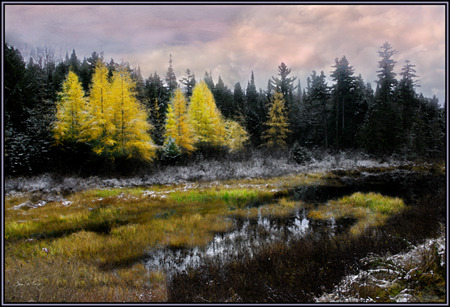
You can help with the effort in many ways. I've donate sales of a beautiful image "Tamarack Tempest" taken within a few miles of Mt. Eustis.

image

To purchase this image on cards, posters as open edition or limited edition fine art prints, click here.

Thursday, April 10, 2014

Preparing for Climate Change in New Hampshire and Militating the Damage

Preparing for Climate Change in New Hampshire and Militating the Damage

For those who missed it, Laura Knoy's edition of The Exchange today on NH Public Radio, featured a discussion about Climate change that was very interesting and disturbing. Two important points of the many made deserve our attention. The first is that, without naming the Northern Pass Project the two scientists stressed the need for decentralized renewable energy as the pathway to a healthier and safer energy future for New Hampshire. Centralized sources of power - like Northern Pass - are more likely to generate jobs elsewhere instead of here in NH and push NH in the direction of what they termed the "High Emissions Scenario" that will wreak economic and environmental havoc on NH. Centralized sources also make us much more vulnerable to acts of terrorism (my observation not part of the discussion). The second point is that what we can do as individuals matters a great deal. Every step we take to reduce our own personal dependence on carbon generating energy sources is a gift we give to the earth.

Knoy's guests, Cameron Wake from UNH's renowned Institute for Earth Oceans and Space, who co-authored UNH's Report on Climate Change in New Hampshire; and Michael Simpson, climate adaptation scientist and chair of the Environmental Studies Department at Antioch University New England, which just announced establishment of a new Climate Change Preparedness Center at Antioch.

The burial of the power lines of Northern Pass is often mentioned as the resolution of the problem but in truth burial of the power lines is a compromise that fails to tackle the most important policy questions with respect to New Hampshire's energy future. If we have to live with buried power lines, it will be a victory for our "view shed" but the fundamental flaws that should kill Northern Pass altogether will cast a pall on our future in many other ways.


Read: http://nhpr.org/post/adapting-climate-change-flood-insurance

Listen here

UNH Institute for the Study of Earth, Oceans, and Spacehttp://www.eos.unh.edu

UNH’s report on climate change in New Hampshire.

Environmental Studies department at Antioch University New England

Antioch Center to study climate change preparedness


Washday, Alton, NH                          Cards & Posters                             Fine Art Prints


Friday, April 4, 2014

You Can Do It the Hard Way or…


Notes from the Country
by Jennifer Larochelle
 

When we bought our home there was snow on the ground, giving us a picture of the winter landscape.  As the snow melted and spring took hold it seemed that new wonders were revealed to us daily. The most magnificent of these was the granite foundation for a barn that once was the centerpiece of our farm. There were priorities to set, however, and though the barn ranked below the wedding, rewiring, insulation, plumbing and walls, Roger and I knew it was only a matter of time. The old stone foundation called to us with each passing day, and as spring faded to summer and summer to fall and the immediate projects got ticked off the list, the barn drew nearer to the top.

As I have often found in my marriage, Roger and I spend a lot of time thinking separately about the same issue or problem. The barn was no different. One winter night I wandered into the kitchen and found Roger drawing plans. We marveled at how parallel our thinking actually was. This seems to happen a lot in our marriage. On one point we differed, and it is this point that has made all the difference in the way I think about our barn. “We’re going to cut our own trees, and mill our own lumber, and we’re going to rebuild that barn,” he said with conviction. Though that was certainly how the original barn had been built it hadn’t occurred to me that we would embark on such an incredible journey. Still, it wasn’t until the first trees were felled that I truly believed that we had begun living our dream.

If you aren’t familiar with life in small-town New England, it is probably important for you to understand at this point how information travels. Knowing what we knew about the barn and our dream of cutting and milling our own trees, the next step was to find someone to help…and the logical place to take that step was at our local village store. Whether the 6:30 crowd that was on their way to work and in a hurry, or the 9:30 crowd that had done their time in the workforce and now liked to swap stories and tales, a well-placed question at the Hebron Village Store could usually illicit an informed answer. Just two years earlier, when I wanted to surprise Roger with a gift of a chainsaw, this is where I went for advice. Another thing that you should know and understand before you ask for local advice is that these are guys who expect follow through; they are deeply invested in your question. In the case of the chainsaw they were more invested than I was, but I understood the importance of reporting back, so I did. The day after we asked, “Do you know anyone who mills lumber?” the answer was given: “David Jaques.” Coincidently we met David at the Village Store just days later. Was this happenstance or destiny?

A cigarette hung loosely from David’s lips. His eyes gazed intently at the task before him. His job was to maximize the yield, to transform the log into lumber. Cut and turn. Cut and turn. Cut and turn. He was masterful at his work. Even the scraps would be utilized: campfire wood bundles for tourists and “stickers” for the next job, and a pile of slabs that to the undiscerning eye were waste, but to the seasoned Yankee represented the heat source for next spring’s maple sugaring. Maximize the yield, minimize the waste.

The first boards were 2x6’s and they brought tears to my eyes . . . This was the beginning. They seemed enormous, but David explained that they were real 2x6’s, not the 1-1/2 by 5-1/2 inch boards the local lumber outlet wants you to believe are 2x6’s. Rather than pull them off the saw carriage, as we had done with the edgings and the slabs, David used the “drag-back” feature to pull them off the end of the mill. “You can do it the hard way,” he exclaimed, “or you can do it the easy way.”

This was David’s mantra and we heard it often. The familiar rumble of his truck marked the beginning of our days, and we were eager as each day began to see his familiar orange wool hat bobbing down toward the mill.  In the first few days we discovered a rhythm to the work, and we learned that David’s simple gestures and nods were an extension of his words. A nod could mean leave it [the board] or take it off. His expectation, though never spoken, was that you cared enough to learn the pattern of the work, so words were unnecessary. The pattern was always the same. The hydraulic lift moved the logs from ground to carriage and with unwavering deliberation David’s mind began to work. His experience and his frugal Yankee spirit required that the log be turned and measured and turned again, sometimes in what seemed like an endless cycle to the casual observer, before the first cut was made. Though the desired yield was 2x6’s or 2x12’s, David’s intention was to get every possible board foot out of each log. And that was exactly what he did. And I watched. Brimming with awe I watched.

I marveled at the math being done in David’s head. With time, I began to see the log as David did; with a mathematical eye. “You’re doing so much math in your head. How do you keep everything straight?”

“Everything I use every day I learned in sixth grade science and math,” said David. Both his words and his work were simple and deliberate.

When one cut could yield two boards, sometimes of different dimensions, it was done and this was what sparked my quilters’ eye. I saw in the wood at that moment not the barn or a 2x6, but a new quilt square design: the Sawyer’s Square. I told David of my quilter’s intentions and his appreciation of my mind’s eye was immediate. His first wife Ruth had been a quilter, and he understood and was pleased by the turn my thoughts had taken.

Clear in David’s approach was the value he placed on hard work and practical thinking. The big logs and the crooked ones burned brightest in David’s eyes. They were challenges - the logs that delineated the seasoned sawyer from the one who didn’t care how big the waste pile got. The waste pile was pride’s measuring stick, you see.

Neighbors came regularly in those first few days. They marveled at our spirit and determination and at David’s prowess with the mill. It was on a day with an audience that David lost his first log. It was a “big gun,” and he had explained that the third turn would be the trickiest. “The weight of the log at that point will be away from the turn. If I don’t get it just right it could tip off the carriage.” And tip it did, with a thud that shook the ground and my nerves. A look toward David saw him shrug his shoulders in an “it happens” gesture, and he moved on to the next log. Nothing wasted, especially time.

The romance of the project embraced all who came to see it in action, especially the guys from the store. The stacks of milled lumber grew, each board carefully “sticked” and aligned so as to dry the wood properly, without the threat of ants or mold or rot. At the end of each day a new tally was taken and we  relished in the thought that we were one step closer to our dream of building a barn.

When the logs got bigger and the boards they yielded grew heavier, sawhorses were moved in to lessen the lifting necessary before the edging occurred. “You can do it the hard way or the easy way,” he said with a twinkle in his eye. And so we worked day in and day out. And the stacks of lumber got higher. And as the stacks grew and the number of logs to mill shrank we became a family of sorts. A family of circumstance, sharing our lunches and our stories around the picnic table, all working together.


The final day of milling was grueling. The sun rose early and hot and in some ways the romance wore thin. David’s orange wool hat had been replaced with a terrycloth sweatband. At this point each of the logs had to be debarked with the spud before cutting. The small curved tool was effective, but there was no denying the full-body workout of debarking. The kind that left you wondering “Did I really do that?” though the growing pile of bark was clear evidence that you had.

Long days of rain had prolonged our work and our brains were tired too. We didn’t react to the sawing as we had at first. David’s concentration didn’t seem to come as readily. He looked longer at each cut and moved more cautiously with the controls. His “thinking cigarette” hung lower on his lip. The melancholy of the day came not just from nearing the end of a job well done, but from a sense that we would not likely be seeing each other anymore. Sure, we could have Dave’s family over for supper, but that would be different. The work that had bound us together for a short time was ending.


The heat of the day made each board seem heavier than the last. As David and I carried a 2x12 to the pile, I thought surely my body would give way. The pile had grown to shoulder height and David stopped to shift his body so he could lift his end over the top of the pile. I stared at him. He was tired and I knew it. Calling up a little sixth grade science of my own I said, “Just rest your end on the pile.” He stared back and tilted his head in question. With a superhuman effort I lifted my end, and using the edge of the pile as a fulcrum pushed the board which slid across the top of the pile with relative ease. When I reached David’s side I said, “You can do it the hard way, or you can do it the easy way.” And we smiled.

As the heat abated and the sun dipped in the sky, we came to the end of our work. With a toast of cheap champagne, and some photos to record history, we admired the lumberyard we had created. This phase was now complete. We had now only to watch and wait as the breezes and heat of summer dried our lumber and drew us to fall, when lumber would become barn.


* Ed's Note: From Heart of NH Magazine


Eyes of Pride

The Eyes of Pride
One original
24x32 Fine art Giclee, Archival inks
Unframed
$785

Open Edition
Print size 8x12
Matted on acid free 16x20 frame-ready matt
Luster photographic paper
$125.00


Choose Size and Edition

This image is also available as an Open Edition reproduction. Open Edition


Thursday, April 3, 2014

How Wolves Change Rivers

How Wolves Change Rivers : If you have ever wondered why it matters that we restore a healthy wolf population to Yellowstone (and other places) take the time to watch this beautifully done video.

Tuesday, February 25, 2014

Kerry's Tees up Keystone for Obama

For those in the business of reading political tea leaves the speech last week in Jakarta by Secretary of State John Kerry is an important milestone.

Ok so I'm mixing metaphors, its an important lump of tea leaves just doesn't do it and furthermore makes light of an issue far too important for us to make light of.

Kerry's speech was the strongest statement yet from an administration that has already made Climate change a cornerstone issue. Most important, Kerry did not mince words. He spoke more like a scientist than as a politician, noting that when 98.9 percent of the scientists say that the world is round, we don't give equal time to the Flat Earth Society and we should treat climate change the same way or we will destroy the only home we have.

Kerry did not polish the rough edges of his speech, he did not "put a shine on it" as some would say; he came right out and said that Climate change was a weapon of mass destruction that we were arming against our own future.

A speech like this is not done in a vacuum. The Secretary of State has plenty of latitude to do his/her job of course but when he makes a speech as powerful as this one, he has to have run it up the flagpole with the White House.

If John Kerry has not intentionally teed up the Keystone Pipeline for a veto by President Obama then he has at the very least put his hand on the scales. Kudos to him for that.

Keystone is bad for the planet but the root problem is not the pipeline, it is the harvesting of the Tar Sands themselves and until we find a way to address the root problem, a Keystone veto will only be a wrinkle in the rug that will pop up somewhere else in the house of cards we call Planet Earth.

~wdk


Rotary Park in Snow, Plymouth, NH
Cards & Posters                         Fine Art Prints


Monday, February 24, 2014

Critical Thinking and the Paradox of History

Critical Thinking and the Paradox of History
Advice from a Lifelong Student (and sometimes Teacher) of History
Wayne D. King

Skepticism is the chastity of the intellect, and it is shameful to surrender it too soon or to the first comer: there is nobility in preserving it coolly and proudly through long youth, until at last, in the ripeness of instinct and discretion, it can be safely exchanged for fidelity and happiness.
George Santayana
US (Spanish-born) philosopher (1863 - 1952)

History and politics must be approached with a large dose of skepticism whether from the left or the right because, after all, history is generally written by the "winners" whether their cause was just or not. While I may have coined, or simply adopted, the phrase "The Paradox of History" neither the phrase itself, nor the thought, is unique or original.

Economist John Maynard Keynes coined the phrase the “Paradox of Thrift” to describe that point in a recession when the public is inclined to save as much as possible and spend as little as possible, while at the same time massive spending is the only way to alleviate the economic peril that the country faces. The Paradox of history is simply that history is written by the “winners” who have a vested interest in the narrative, while at the same time, history's greatest benefit to us is what might be learned from an unbiased narrative that provides us an opportunity to see both the good and bad in its events, personas and results. Stated more eloquently by Gordon Craig, “the duty of the historian is to restore to the past the options it once had.”

So, therefore, a good teacher's first responsibility to his or her students is to convince them that they should believe as little as possible of what he or she is about to tell them. Let's call that the "educators corollary" to the Paradox of History.

Having admitted to complete and utter fallibility, a good teacher must then impart his/her knowledge assertively, as if no other source was closer to the oracle of knowledge.

A worthy teacher, then, seeks not to serve answers or truths but to urge students toward the development of critical thinking skills and a healthy skepticism, from which they can derive their own narrative.

This does not in any way alleviate the burden upon you, the student. Quite the contrary in fact - it imposes a larger responsibility because you must find a way to demonstrate a modicum of deference to my years of experience and knowledge while, at the same time, double checking the veracity of everything you learn from me.

One of the first things that you will learn is that a good critical thinker does not mistake opinion or "common sense" for fact. Opinion, after all is just that; one person’s view of something. Common sense, that stalwart beacon of logic and wisdom with which your elders have urged you to imbue your thoughts and behavior, is an even more devilish force because it is empowered by the vast influence of majority thought.

Stephen Hawking, in his extraordinary "Science in the New Millennium" speech, said “. . . common sense is just another name for the prejudices that we have been brought up with.”

Facts, on the other hand, as Mark Twain said, are "stubborn things"
they may stand by themselves or they may be turned into thought, but without them thought has no basis in reality; and, ultimately, no power.

So, as we begin this term, make it your goal to keep both your eyes and your mind wide open. Take joy in the moments in which your notion of the world is turned upside down because that is the surest sign that something useful is happening to you.

The Best Leader

A leader is best
When people barely know
That he exists,

Less good when
They obey and acclaim him,

Worse when
They fear and despise him.

Fail to honor people
And they fail to honor you.

But of a good leader,
When his work is done,
His aim fulfilled,
they will all say,
'We did this ourselves.’

Lao-Tzu
Chinese philosopher

Wayne D. King 2009


A Glow of Lilies
Cards & Posters
Fine Art Prints

Thursday, June 6, 2013

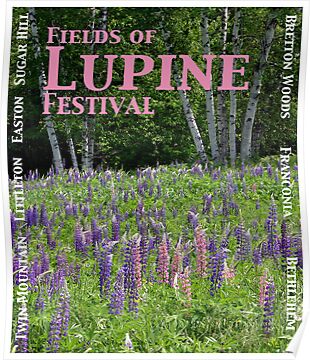
Fields of Lupine Festival


Spring Symphony of Lupine
The Fields of Lupine Festival is a regional event celebrating the blossoming of the Lupines in New Hampshire's Northcountry.

Nowhere else in New Hampshire does this flower figure so prominently into the landscape and the ethos of the region.

Early June sees roadsides and fields carpeted with Lupines and the view is serene and awe inspiring at once.

The communities of Bethlehem, Easton, Franconia, Sugar Hill, Twin Mountain, and Bretton Woods all join together to celebrate the coming of the Lupine and to showcase their region.

Every year they put together a host of great events around the flowering: Garden tours, historic inn tours, concerts, sidewalk sales, art exhibits.

If you are a photographer, painter, artist of any sort, you'll think you've died and gone to heaven as you wander the area and capture the beauty with your mind and your medium.


Links and Details

Franconia Chamber of Commerce Lupine Festival

Lupine Dreams Gallery
Images of Wayne D. King
Cards, Posters, Art Prints of Lupine
http://fineartamerica.com/profiles/wayne-king.html?tab=artworkgalleries&artworkgalleryid=302229


Lupine Dreams Calendar


Fields of Lupine Poster


Lupine Postage Stamp


----------------------------------------------------
Special: Best Friend's Song Cards, posters and print. Reduced 50%. This beautiful piece with a quote from an unknown author makes a great gift as a poster, a print or cards. The quote "A friend is someone who knows the song in your heart and sings it back to you when you have forgotten how it goes."
http://bit.ly/1k5s16Z


----------------------------------------------------