Sunday, November 12, 2017

The Wikipedia Conundrum

Many a teacher today forbids his/her students use of Wikipedia, yet it is arguably the richest information resource of all time; an encyclopedia which draws on users to expand the breadth and depth of the information contained "within" it.

The argument of those teachers may be that it is "unreliable" . . . a lazy man's refuge. Yet in the end, how is that different from any other works of humans? The very act of committing words to paper is an act fraught with the perils associated with the human condition. . . that each of us brings the perspectives and prejudices of his/her own arc of experience to the task of conveying a "truth" or a set of "truths".

The physicist Stephen Hawking, in a speech celebrating the new Millennium at the White House said ". . . common sense is just another name for the prejudices that we have been brought up with."

Wikipedia is no more or less useful than any other resource but it does provide an effective launchpad for exploring almost any idea, event, person or theory.

To deny students access to the rich resources contained within Wikipedia is tantamount to denying them access to the wisdom of their elders or their teachers. Instead they must be taught to appreciate Wikipedia and to be aware of its limitations - as Ronald Reagan put it to "trust but verify". Reagan was speaking of the complexities of the US-Russian relationship, but he could very well have been speaking about the task of researching, or in an even broader sense the process of learning.

A good teacher need not fear Wikipedia, unless the depth of understanding that he or she themselves bring to their discipline and teaching is so shallow as to grant Wikipedia the power of absolute truth. A good teacher will use this resource as a means of stimulating students to seek out pathways to greater understanding, a solitary brainstorming session where ideas, links and resources lead us to drill deeper into the resources that lie beyond the gates of the wiki kingdom.

Wayne D. King

Asquamchumaukee - Place of Mountain Waters - A Ramble Through the Baker River Valley

Here's a great idea for holiday gift giving. . .

Asquamchumaukee - A photographic ramble through the Baker River Valley of New Hampshire


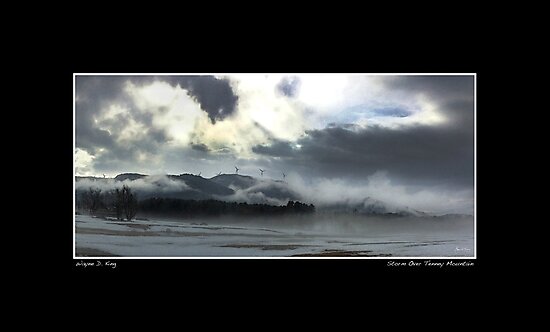
Storm Over Tenney Mountain

Asquamchumaukee - Place of Mountain Waters

A photographic ramble through the Baker River Valley of New Hampshire

This book and the images from it are available in a number of different formats including a large landscape hardcover, signed and numbered, limited edition art book; an open edition in hardcover, softcover and eBook formats as well as other related products including calendars, clocks, mugs, cards, posters and prints.

Signed, Numbered Limited Edition, Large Format $165.00
This book requires the artist to sign and number the books, it can ONLY be ordered directly from me at this secure address:
Asquamchumaukee Cover
http://bit.ly/OrderAsquam

Purchase the signed limited edition and receive your choice of two complimentary posters


Open Edition (unsigned) - Large Format $98.76
Available through Amazon.com
Large Landscape Hardcover 13” x 11” 
42 Pages printed on standard paper


Open Edition Small Hardcover (unsigned) - 8"x10" Format $59.35
Available through Amazon.com
Standard Landscape Hardcover 8” x 10” 
42 Pages printed on standard paper
Hardcover with Dust Jacket: 


Softcover "Keepsake Version"  8"x10": $39.58
Plus shipping & handling

eBook from Blurb
42 Pages
$4.99

Detailed information about Calendars, cards, clocks and other gifts can be found here.

Asquamchumaukee Facebook Page
https://www.facebook.com/pages/Asquamchumaukee-Baker-River-Valley/189924584514401?ref=hl

http://bit.ly/Asquam_FB


Dedication: This book is dedicated to the "Ladies of Got Lunch! Rumney" who saw a need and selflessly stepped forward to help and the millions of heroic people who volunteer in their communities, small and large in the quiet of anonymity and the glow of the hope they create through their actions.


ebook
http://store.blurb.com/ebooks/491117-asquamchumaukee-place-of-mountain-waters-open-edition


http://blur.by/1EISj5I

50% of the net  proceeds from sales of this book will benefit the local "Got Lunch!" programs in the Valley. 


Friday, October 27, 2017

"Sacred Trust" Overview


“The Monkey Wrench Gang Meets the Third Industrial Revolution!”

In the coming “Age of Electricity” the principal battleground will be over who controls the production and distribution of power. All across America today the battle lines are being drawn and the two sides are rushing to create advantages for themselves. Already more than 10 trans-national power transmission projects are proposed from Maine to Washington State and the Canadian Electricity Association projects a tripling of that demand in the next ten years. In most instances these transmission projects are being proposed by utility companies or consortiums that include a local utility company.

Utility companies represent one front in this battle over competing visions of our energy future. These utility companies, already in an existential battle for survival, seek to maintain control of the revenues generated by the flow of electricity. With a few rare exceptions, they are pitted against those advocates of a new distributed energy paradigm where small, renewable power production replaces the large electricity generators of today.  

Most Americans notice that things are changing with respect to energy production and transmission but they have yet to put together the full picture of what will be a sea change in life for every American this presages.

“Sacred Trust” is intended to tell that story in the context of a novel about a group of citizens that have joined together to stop the construction of one, especially egregious powerline, proposed in the small state of New Hampshire where tourism is the second most important industry and the people deeply cherish their beautiful mountains, clean air and pristine waterways.

The power company behind the transmission line, Polaris Electric, proposes to put most of the line above ground with massive 150 foot towers and intends to export 100% of the power right on through the state - like a giant extension cord - with no benefit to the people of the state. In short, like the oligarchs of a previous age, they intend to reap 100% of the benefits and to pass off a large portion of their costs through the generations-long visual pollution of the public commons, to say nothing of the decline in property values and the unknown scientific consequences of high voltage transmission lines on citizens living in their path.

The citizens of the state who stand to lose most from the destruction of real estate values and cherished viewscape are dead set against the project but the political winds are against them with a Governor in the pocket of the utility company and an approval process that seems to be rigged against them, eight unlikely compatriots from across the political spectrum come together to take on the consortium proposing the “Granite Skyway” Transmission line.

While the compatriots, who call themselves The Trust, engage in creative civil disobedience intending to stop the project, or at the very least to literally drive it underground, a group of writers and activists, presenting themselves in the style of the writers of the Federalist Papers produce a series of essays in opposition to Granite Skyway, making the intellectual case, justifying the actions of The Trust.  One business writer, in search of a pulitzer, takes on the task of describing the tableau in which all of this takes place beginning with the 1972 election of Jimmy Carter and the drafting of the National Energy Policy Act and the Public Utilities Regulatory Policy Act into which one lone New Hampshire Senator, John Durkin, inserted two lines that changed history and ushered in the renewable energy revolution.Through the device of a series of articles scattered through the novel, business editor James Kitchen leads his readers through a virtual primer of the battle for a new post-carbon energy paradigm.

"Sacred Trust" is a vicarious, high voltage adventure to stop a private electric transmission powerline that leads the reader through not only the hijinks of The Trust, but also through the series of choices with which we all are currently confronting, or will be, in this new “Age of Electricity”.

Described by one reader as "The Monkey Wrench Gang Meets the Third Industrial Revolution" the book follows these unlikely compatriots as they dodge both the law and a cabal of recruits doing the dirty work of the Consortium.

In part one of the book Sasha Brandt, an Iroquois woman from Canada who travels with her companion, a wolf named Cochise, meets Daniel Roy, a guide and outdoorsman while hiking the Mahoosuc Range on the Appalachian Trail. After a unique first encounter the two - three with Cochise - continue their hike together. A few days later, while paddling on Lake Umbagog, they find themselves unexpectedly camping together with an unusual assortment of people including a former Olympic paddler, a very conservative deer farmer, a real estate broker, a retired spook who was the first US victim of Lyme disease and an iconoclast named Thomas (just Thomas) who is also a former Army Ranger now living as a recluse in multiple backwoods abodes in the Great North Woods area of New Hampshire. Thomas is also unique in that his primary mode of transportation is a moose named Metallak, who pulls a cart when traveling with Thomas’ five dogs or wears a saddle when Thomas rides him solo.

The group quickly discovers that they have one very important thing in common - a deep concern about the Granite Skyway proposal to transport electricity from Canada to the toney suburbs of Boston, New York, Connecticut, Philadelphia and Washington D.C.. Their concerns range from the effect it will have on the habitat of newly re-established Raptor populations; to the clear cutting necessary to construct the line; and, the impact of 150 foot towers on the landscape of their beloved state.

The threat to the environment and the scenic beauty are only the tip of an iceberg that includes the value of homes, farms and businesses built by generations of men and women in this hardscrabble land. Rumors alone are already affecting life for many caught up in whisper campaign around this proposed transmission line. All agree, Granite Skyway poses an existential threat to an entire way of life.

Determined to do more than shuffle papers and employ lawyers, the compatriots form a band of brothers and sisters - along with Cochise and Metallak - calling themselves "The Trust". Armed with only their wits and a lot of heart they embark on a rolicking campaign of civil disobedience that would make Thoreau, Alinsky and Dr. King proud.

While the book is a work of fiction, teachers and professors may find it a book that would add a new dimension to classroom discussions and an interesting touch for classes on sustainability, renewable energy or the American tradition of protest.

Throughout their adventure the members of "The Trust" examine many of the most important questions of our time including how America can continue to make an honored space for free speech and civil disobedience in an era of terror; how social media can help create accountability in an increasingly corporatized mega-media landscape; and, how citizens can challenge the corporate oligarchies that often threaten our planet's future.

"Sacred Trust" is written by Wayne King a former State Senator, Democratic nominee for Governor of NH, and most recently CEO of environmental cleanup company MOP Environmental Solutions. Not coincidentally, King worked his way through college as a Mountain Guide in New Hampshire’s White Mountain which explains his detailed knowledge of the setting for the novel. The book is filled with political and environmental stories that will have you laughing and gasping and wondering what is true and what is fiction.

"Sacred Trust' is a vicarious, high voltage campaign to stop the Granite Skyway power transmission project and its short-sighted and in some cases greedy corporate sponsors, intent on using political muscle and money to lock up the region's energy production and distribution, short circuiting efforts to bring about an energy future based on sustainable, and renewable energy deployed through micro-grids, smart-grids and a competitive environment that makes energy more - not less - affordable.

http://bit.ly/STrust

Saturday, July 15, 2017

"Sacred Trust" Published as eBook on Amazon

News Release
For Immediate Release


"Sacred Trust" Published as ebook on Amazon
Available from Kindle Books
Moosewood Communications Publisher

http://bit.ly/STrust

"Sacred Trust" A vicarious, high voltage adventure to stop a private powerline has been published on Amazon.com as an ebook with the paper edition due soon.

Described by one reader as "The Monkey Wrench Gang Meets the Third Industrial Revolution" the book is a fictional account of a group of unlikely compatriots who join together to stop a powerline proposed by a private consortium, employing creative civil disobedience in the traditions of Alinsky, Thoreau and King. 

In the book, Sasha Brandt, an Iroquois woman from Canada who travels with her companion, a wolf named Cochise, meets Daniel Roy, a guide and outdoorsman while hiking the Mahoosuc Range of the Appalachian Trail. The two find themselves unexpectedly camping together on Lake Umbagog with a group of unlikely compatriots including a former Olympic paddler, a deer farmer, a retired spook who was the first US victim of Lyme disease and an iconoclast named Thomas (just Thomas) who lives in multiple backwoods abodes in the Great North Woods and rides a moose named Metallak. The campsite itself is said to have been frequented by the Indian medicine woman Moll Ockett in the early days of the American Republic. 

They find, in short order, that they have one very important thing in common - a deep concern about a proposed private power transmission line proposed to transport electricity from Canada to the toney suburbs of Boston, New York, Connecticut, Philadelphia and Washington D.C. 

The project, dubbed "Granite Skyway", proposes to bring massive 150 foot towers through the most beautiful parts of a state that boasts some of the most beautiful scenery in the entire country.

The threat to the environment and the scenic beauty are only the tip of an iceberg that includes the value of homes, farms and businesses built by generations of men and women in this hardscrabble land. Already affecting life for many caught up in the mere rumor of this proposed transmission line, Granite Skyway poses an existential threat to an entire way of life.

Determined to do more than shuffle papers and employ lawyers, the compatriots form a band of brothers and sisters - along with Cochise and Metallak - calling themselves "The Trust". Armed with only their wits and a lot of heart they embark on a rolicking campaign of civil disobedience that would make Thoreau, Alinsky and Dr. King proud.

While the book is a work of fiction, teachers and professors may find it a book that would add a new dimension to classroom discussions and an interesting touch for classes on sustainability, renewable energy or the American tradition of protest. Woven into the story narrative are news stories by a journalist observing the shifts and upheavals of climate change and the renewable revolution as well as a group of patriots writing in the style of the Federalist Paper authors in opposition to the power project.

Throughout their adventure the members of "The Trust" examine many of the most important questions of our time including how America can continue to make an honored space for free speech and civil disobedience in an era of terror; how social media can help create accountability in an increasingly corporatized mega-media landscape; and, how citizens can challenge the corporate oligarchies that threaten our planet's future.


"Sacred Trust" is written by Wayne King a former State Senator, Democratic nominee for Governor of NH, and most recently CEO of environmental cleanup company MOP Environmental Solutions. Not coincidentally, King worked his way through college as a White Mountain Guide which explains his detailed knowledge of New Hampshire's White Mountains. The book is filled with political and environmental stories that will have you laughing and gasping and wondering what is true and what is fiction. 

"Sacred Trust' is a vicarious, high voltage campaign to stop the Granite Skyway power transmission project and its short-sighted and in some cases greedy corporate sponsors, intent on using political muscle and money to lock up the region's energy production and distribution, short circuiting efforts to bring about an energy future based on sustainable, and renewable energy deployed through micro-grids, smart-grids and a competitive environment that makes energy more - not less - affordable. 


Available from Kindle Books
Moosewood Communications Publisher

Saturday, June 17, 2017

Common Sense 2017: Time for Democrats to Offer Alternatives

Common Sense 2017: Time for Democrats to Offer Alternatives

Wayne D. King

I'm so tired of the Democrats in Congress acting like the Republicans who did nothing but obstruct Barack Obama. I want them to stand up and offer alternatives.

Tell the country how to fix Obamacare and try to peel off enough Republicans to pass it.

Offer a plan for infrastructure that modernizes the national grid to prepare us for the Internet of Things and the post carbon era with laterally scaled micro-grids linking homes and businesses and small power producers. The vast majority of good jobs that will be created over the next 20 years will be in building out the Third Industrial Revolution infrastructure. Let's get to it. China is already working to wrest the mantle of world leadership from us. Let's not give it away without a fight!

One up the Republicans and offer a tax reform plan that eliminates business taxes entirely (and all the special exemptions, incentives, and give aways - in 2015 fossil fuel companies received more than 82 billion dollars in tax incentives) Collect the taxes from the individuals who benefit from the profits and let the shareholders determine whether the companies should be spending money for wasteful purposes. This would also eliminate all of the onerous filings required of nonprofits and encourage the development of more of them.

Choose 10 of the most impoverished, jobless regions of the country and test ten different outside-the-box ideas for turning them around. Put some real money behind the effort. Toss out the ideas that fail and try ten more. Take the ones that work and share them with others who are experiencing similar problems.  Start by testing the Guaranteed Basic Income idea providing a minimal monthly allowance to every adult (in the test area) and then allow them to build their employment and lifestyle choices  around that to achieve a standard of living that is real, sustainable and fulfilling.

Create a National Service requirement. Every person who reaches the age of 18 should be required to choose between military or civil service and to serve 2 years before the age of 30. No exceptions for rich kids or people with disabilities or any other excuse. . . ok if you must have a conscientious objector status for those who object to being forced to do right - but make it hard as hell to obtain. Think about what it would do for the country to have rich kids and poor kids working side by side to make this world a better place. Think of how many kids who have grown up in abject poverty would be empowered by the franchise granted to them by two years of service to the nation. A young man or woman who has spent two years building the nation is going to think twice before he or she throws a trash can through a storefront window.  From many we must be one again. This is the revolution of our time.

Just saying . . .
wdk 2017

The Whisper of Wind


Friday, April 7, 2017

King Image "The Road Darkens" Chosen in Juried Competition "One Planet, One Home"

King Image "The Road Darkens" Chosen in Juried Competition "One Planet, One Home"
Wayne King's image "The Road Darkens" has been chosen for a juried show at the Kehler Liddell Gallery in New Haven, CT. The exhibition: "One Planet, One Home" focuses on the challenges of Climate Change.

The image is part of a Climate Change series King has been working on for the past two years. The image alludes to the growing crisis. The image is a color montage of several different images including elements of photography and watercolor painting. One original edition of 5 prints is created, printed on fine art rag paper using archival inks; signed and with a certificate of authenticity. To purchase an original, click here: http://bit.ly/1ZxBg3p

The title is drawn from a quote from J. R. R. Tolkien's "Fellowship of the Ring". "Faithless is he who says farewell when the road darkens."

A digitally initialed open edition, also created, provides the closest approximation to an original work at a more affordable price, especially for those who love art but don't feel the need to purchase original works. Follow the link above and choose the open edition link if you would prefer the open edition.

The image is also available as a poster and a greeting card, here: https://www.zazzle.com/moosewoodmindscapes?qs=Road%20Darkens

Kehler Liddel Gallery:
http://www.kehlerliddellgallery.com/


Tuesday, April 4, 2017

Where are the good jobs in the next decade?

Where are the good jobs in the next decade?
by Wayne King

In the next decade the fastest growing sector of job growth worldwide will be those jobs associated with moving toward a renewable energy future and creating smart grids and a Third Industrial Revolution infrastructure to carry locally produced and distributed energy.

China recently announced that they would pour 82 Billion dollars into creation of a smart grid.

This is the very sector of our economy that Donald Trump has suppressed.

Its not that these jobs will move elsewhere. One of the largest benefits to locally produced, renewable energy is that it produces local jobs to build it and the long-term jobs stay local as well. They will just not be grown here where we are desperately seeking ways to create jobs that can replace the well paying jobs of the past.

The truth is that the jobs of the past are largely gone and no amount of huffing and puffing by politicians are going to bring them back. The battle for the future will be for the jobs of the future. Those countries that are building a Third Industrial Revolution infrastructure will have a massive competitive advantage.

If we targeted just 1/4 of the funds we use for infrastructure toward building this infrastructure of the future. We would produce millions more jobs than we are producing trying to revive the jobs of the past.

Here's just one example: I would be willing to bet that not one single NET new job will be produced in the coal industry in the next year. The companies will take advantage of the new Trump EPA to pass costs off to the public domain by polluting more - one change made recently allows coal companies to use public waterways for the disposal of wastes (hell it came out of the ground didn't it!) . But the coal companies will add more automation to take coal out of the ground, requiring fewer coal miners to do the job. The only bright spot is that the market for their coal is drying up faster than the RioGrande. Within a decade most of these companies will be gone. In the meantime owners will try to suck every bit of value that they can from their dying industry. Then they will throw up their hands and declare bankruptcy allowing them to walk away from their remaining debts.


Windows at an Exhibition
Purchase this Image